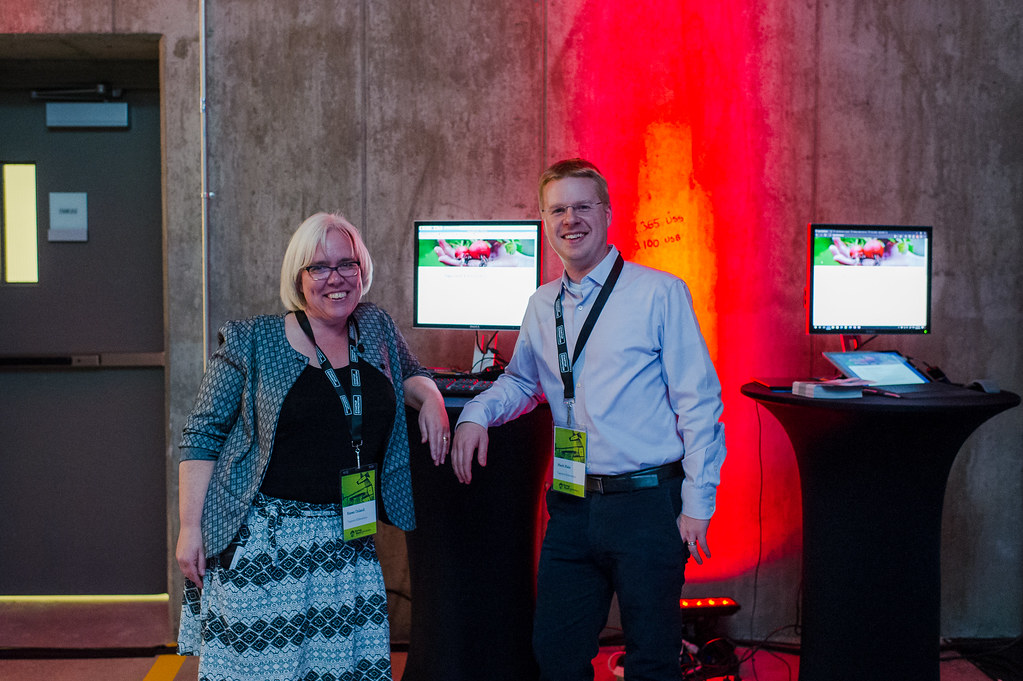
Taproot Survey earns more award nominations

Taproot’s 2025 municipal election project has earned two new award nominations, from the Canadian Journalism Foundation and the National Media Awards Foundation.

We previously shared that the Taproot Survey was a finalist for a National Newspaper Award in the Innovation in Journalism category. While we did not win that one, we remain endlessly proud to have been a finalist. Congratulations to the winners, Cody Gault and Lucas Timmons of the Toronto Star, for their automated natural language search engine that provided real-time riding data for all 343 ridings in the 2025 federal election, and to our fellow runners-up at Canada’s National Observer for Civic Searchlight, a tool that transcribes municipal council meetings.

Now, we’re thrilled to share that our election project is a finalist for the Dr. Eric Jackman Award for Excellence in Journalism from the Canadian Journalism Foundation, and for the Innovation in Digital Storytelling category at the Digital Publishing Awards from the National Media Awards Foundation.

CJF Dr. Eric Jackman Award for Excellence in Journalism

The CJF award honours “news organizations that embody exemplary journalism and have a profound positive impact on the communities they serve.” The Taproot Survey was highlighted as a way to “focus on the issues that mattered most to voters instead of the horse race,” along with our accompanying election coverage.

We’re in very good company on the list of finalists. Also up for the award in the small media category are The Green Line in Toronto for a series on the effects of LRT construction on housing; the Investigative Journalism Foundation in collaboration with The Narwhal for a series on gas companies avoiding regulation in B.C.; The Sprawl for coverage of Calgary’s municipal election; and The Trillium’s work to expose patronage in the deployment of a skills development fund in Ontario.

The finalists in the large media category are APTN, The Canadian Press, CBC News, Le Devoir, and CTV News. The winners will be announced on June 10 in Toronto.

Digital Publishing Awards

The Innovation in Digital Storytelling category of the Digital Publishing Awards honours “an innovative digital creation, project or concept … to enhance the storytelling, the audience engagement and/or experience.” Our election site, including the Taproot Survey, was nominated for this award.

Other finalists include FAIT QUE, a “living journalism lab” for people aged 18 to 35; The Feathertale Review for Issue #29, which it describes as “the world’s first fully audible issue of an award-winning magazine”; and The Green Line for How to Toronto: Our No-BS Guide to City Living.

The winners will be announced on June 5 in Toronto.

Support our award-worthy work

We don’t do this work for awards, but it is welcome validation for the quality of what the Taproot team produced, and a great indication that those who have helped us along the way have made a wise investment.

If you would like to help us do more, refer a friend, buy a membership, or consider sponsorship or advertising, depending on your circumstances. Your support makes it possible for us to do work that informs, connects, and empowers the Edmonton region. Thank you!

How we use artificial intelligence at Taproot

At Taproot, we believe trust is built not only by what we publish, but by being clear about how we work. Transparency about the tools we use and the standards we hold ourselves to underpins our ability to deliver reliable intelligence about the communities we serve.

We have now published a policy on artificial intelligence. We use AI to help make our work more efficient, accessible, and useful, while keeping our journalism human-led, human-edited, and human-accountable.

In the long term, we may not need a separate AI policy at all, as our existing ethics policy covers the principles that guide our work regardless of the tools we use. But in the short term, AI is changing quickly, public interest is high, and there is understandable uncertainty about what AI use actually means in practice. For now, we think it is better to be explicit about how we use these tools.

Why we are using AI

We are using AI to help our team do more valuable work and spend more of its time where human judgment matters most.

We understand that some people feel strongly that AI should not be used at all. We respect that view, but we do not share it. We think AI can be a useful tool when used responsibly. It is clear that AI is here to stay, and is even being incorporated into tools we already use, whether we like it or not. We think the right approach is to use AI thoughtfully, with transparency and accountability, rather than trying to swim upstream against the tide of technology.

We use AI for tasks such as summarizing information, brainstorming questions, generating first drafts, detecting spelling and grammar issues, assisting with research, analyzing large datasets, and transcribing interviews. We also use AI for coding and product development, business operations, and other non-editorial tasks.

In every case, a human remains responsible for reviewing, checking, and deciding whether and how the work will be used.

How we actually use AI

We view AI primarily as a tool. Like other tools, it can be used thoughtfully or poorly. As you might expect, we have put a lot of thought into how we use it!

We do not go to a chatbot and say, “write an article about X” and then publish what comes back. That kind of approach produces AI slop, and it is not what we do.

Instead, we build and use agents. An LLM agent runs tools in a loop to achieve a goal. (LLM stands for large language model, which is the type of AI we generally use.)

For example, we have developed an agent to generate first drafts of written work. We provide the agent with a set of instructions, transcripts of interviews, and reporting notes. We also equip the agent to use tools for things such as accessing our archives and incorporating our style guide. The agent produces a first draft that is constrained by our instructions, shaped by our reporting, and ready for human input and editing. Before the draft is published, it follows the same editorial process as our pre-AI drafts did: It is revised, edited, fact-checked, and reviewed by at least one human editor.

We developed this agent by identifying and documenting the steps we would normally take to produce a first draft. We then built a system that can follow those steps, using AI to help with the parts that are more mechanical and time-consuming. This approach allows us to benefit from the efficiency of AI while keeping our work human-led and human-edited.

We deployed our first agents earlier this year, and will continue to iterate on our approach as we learn more about what works and what doesn’t. Using agents like this changes the way we work, but it doesn’t change the necessary conditions for good work. Garbage in, garbage out still applies!

We have high expectations for quality, with or without AI. It has been an interesting challenge to figure out how to “teach” an agent to meet those standards. The process of doing that has helped us clarify, document, and improve our own internal processes. This is a welcome side effect of using AI the way we do.

When we disclose AI use

In the same way that we do not disclose every use of a spell-checker, we don’t think every use of AI needs to be individually disclosed. That said, readers deserve to know when AI has played a significant role in the work they are seeing.

For example, when we use AI to analyze material at a scale that would not otherwise have been practical, we disclose that. We used LLMs to help analyze the input we gathered during our 2025 election project, and we disclosed that.

We avoid generating visuals with AI. There are interesting and potentially appropriate use cases, and we do not rule them out in principle, but if we ever use AI-generated visual material, we would disclose that clearly.

Our policy also commits us to disclosing AI use where a reader could reasonably feel misled if we did not explain how AI was used. That is a bit of a judgment call, but as always, we will err on the side of transparency.

What’s next

Journalism has always evolved alongside technology. New tools often arrive with uncertainty, debate, and strong opinions. Over time, some become ordinary parts of the workflow. We expect many AI tools will follow a similar path.

We are optimistic about the potential of AI to assist us in achieving our mission to help communities understand themselves better. We are also clear-eyed about the risks and challenges, and we are committed to using AI in a way that is consistent with our values.

We invite you to read our Artificial Intelligence Policy. If you have questions about how we use AI at Taproot, please get in touch.

How Taproot Edmonton made an impact in 2025

We embarked on 2025 with a clear mission: to inform, connect, and empower our community with reliable intelligence. It was a year that tested our capacity and proved our value, as we navigated challenging economic times, covered a pivotal municipal election, and deepened our engagement with the Edmonton region.

The result was our most impactful year yet. We saw unprecedented growth in our audience, with overall website traffic more than tripling alongside meaningful increases in subscribers and members. But the numbers only tell part of the story. The real impact is found in the voters who felt prepared for the ballot box, the residents who discovered new ways to participate in their city, and the recognition we received for our collaborative approach to journalism.

An award-winning year

Early in the year, our commitment to serving the community was recognized on an international stage. Housing Complex, our series exploring Edmonton’s housing system, was named a Collaboration of the Year at the 2025 LION Publishers Sustainability Awards.

Taproot Edmonton won a Collaboration of the Year award from LION Publishers for Housing Complex, our series on Edmonton’s housing system. (Taproot Edmonton)

The project, which launched in 2024, was a partnership with the Edmonton Coalition on Housing and Homelessness funded in part by the Alberta Real Estate Foundation. It exemplified what we strive for: journalism that goes deep, works with the community, and seeks solutions.

“Hands down, this is a tour de force of the power of collaboration and the power of serving your community with high-quality journalism delivered with care, respect, and depth,” the judges noted. This accolade set the tone for a year defined by impactful, service-oriented reporting.

Helping voters make informed choices

Our most significant undertaking in 2025 was our comprehensive election project. We knew that to serve our city effectively, we needed to help voters cut through the noise. The centrepiece of this effort was the Taproot Survey. By asking candidates for mayor and city council to respond to key questions, we created a unique tool used by more than 27,000 voters to compare their views with those of the candidates.

“Before I was made aware of the Taproot Election project I was struggling to understand who the other candidates in my ward were and what they stood for,” said Sonia P. “Taproot really allowed me to clarify my own positions and those of the candidates out there. It was just a superb use of technology plus journalism. Honestly, it was an amazing community service.”

The response was overwhelming. Our election website became a hub for civic engagement, drawing nearly 160,000 unique visitors. Beyond the digital tools, we fostered real-world connection through listening sessions, partnerships with 32 local organizations, and a mayoral forum co-hosted with the Edmonton Public Library.

Readers such as Guy M. called the Taproot Survey “an extraordinary gift to the community where traditional media has abandoned us,” noting that it “helped illustrate the complex job that it is to be a member of council making tough choices with limited options.”

“Taproot’s coverage of the 2025 Municipal Election proved, once again, just how vital local media is to our society,” added Kevin J. “A strong, informative independent media outlet is so beneficial and we need more of it. So thank you for all your tireless efforts. It has not gone unnoticed.”

The election project is a powerful example of the unique impact we can make by blending technology, product thinking, and editorial craft to build tools and experiences that make local information more useful.

You can read more about this massive effort in our election project wrap-up.

Informing with reliable intelligence

While the election was a major focus, our team continued to deliver the daily intelligence that keeps Edmontonians connected to their city. Whether through in-depth reporting or the bite-sized updates in The Pulse, we are designed for signal, not extraction, ensuring our readers have an accurate, trustworthy snapshot of the region.

The scale of this operation has grown significantly. In 2025, we sent 1.7 million emails across hundreds of campaigns. Despite this high volume, our readers remained highly engaged, with an impressive 56.2% open rate. This consistency matters. As reader Jodi M. shared, “I start every morning reading The Pulse. I am always delighted by the news that it contains. By reading it, I feel better informed and more a part of the Edmonton community.”

This trust translated into substantial audience growth, with traffic to our primary news website surging by more than 244%. We were also thrilled to see our individual membership base expand by 37%, reflecting a growing community that values our work.

Connecting the community

A vibrant city is one where people show up, and we are proud to help make that happen. The Taproot Edmonton Calendar has become an essential utility, with our team curating and adding more than 7,200 events in 2025 alone.

“The Calendar has been the cherry on top for me, as it always excites me when I find something cool happening in the city that I can go check out over the weekend,” says Thiago V., a newcomer to Edmonton.

We also kept a close watch on the pulse of various sectors through our weekly roundups. Relentlessly focused on local, we connect the dots across the ecosystem to help our community understand itself better. We tracked thousands of headlines and events related to the arts, business, food, tech, and more, helping our readers stay informed about the communities they care about.

On the audio front, Speaking Municipally continued to lead the conversation on civic affairs. With nearly 60,000 downloads in 2025, the podcast surpassed 300,000 all-time downloads, cementing its place as a “must-listen” for engaged citizens.

Perhaps unsurprisingly, the most popular episodes were those focused on the municipal election:

  1. Episode 331: Return of the Knack
  2. Episode 309: He’s got a Knack for winning elections
  3. Episode 315: You’re out of order! You’re out of order! This whole council is out of order!
  4. Episode 329: Patience is a virtue
  5. Episode 332: The heart berry opens, a chapter closes

I guess we should get Mayor Knack on the show again in 2026!

Setting the agenda and inspiring through stories

The reporting our team undertook this year sparked curiosity and drove conversations.

The stories that resonated most with our readers reflected a city in transition, grappling with growth, governance, and identity. From the dissolution of regional partnerships to the future of our downtown mall, here are the stories that stood out in 2025:

  1. Three municipalities finalize departure from Edmonton Global
  2. Teresa Spinelli doubles down on Little Italy as cooperative dissolves
  3. Edmonton votes 2025: What we know so far
  4. Debate grows as Edmonton plans 23 km of new active transportation infrastructure for 2025
  5. Controversial casino licence changes hands in $5.8M deal
  6. Visionary says Edmonton needs to look elsewhere to re-imagine its downtown mall
  7. Duchess buys up space on 124 Street to consolidate operations
  8. Campaign aims to see Edmonton cut the lawn and replace with gardens, native plants
  9. Edmonton ‘still not ready’ as 2024 population growth exceeded even breakneck forecast: Knack
  10. ETS begins adding small surcharge for big-name concert tickets at Commonwealth

We also found ways to include joy and delight in The Pulse. We published 46 “A moment in history” articles, and launched the Taproot Mini, a daily crossword created by Edmonton puzzle-maker Brandon Cathcart.

Join us in building an informed community

This work of informing, connecting, and empowering is only possible because of our community. In 2025, we welcomed more supporters than ever before. We’re deeply grateful to each and every one of you who read, share, and contribute to Taproot Edmonton.

If you value reliable intelligence about the Edmonton region and want to see this work continue, please consider becoming a member.

Here’s to another year of growth and impact in 2026!

How wellness checks help Taproot thrive

At Taproot, we pride ourselves on creating a workplace where people feel valued, supported, and empowered to do their best work. As we chart a new future for local news, we are committed to leaving behind the often problematic culture of traditional newsrooms. One of the practices that has helped us do this is the wellness check, a simple but powerful way to start every meeting.

What is a wellness check?

Our wellness check asks, “How are you feeling today?” Participants select one of four states: Struggling, Surviving, Thriving, or Excelling. Each state includes descriptors to help pinpoint where someone is — whether they’re feeling low energy and unproductive or inspired and in a state of flow.

We didn’t invent the idea of a wellness or mental health check-in, and neither did ATB X, the accelerator program where we first encountered this practice in 2019. But we embraced it, made it our own, and adapted it to fit Taproot’s needs. Over time, it has become a cornerstone of how we connect as a team.

Why it matters

It can be easy to start a meeting with a generic “How’s everyone doing?” and hear the automatic “I’m fine” response. But “fine” doesn’t give us any useful information. The wellness check allows us to go deeper and create a space where people feel safe sharing how they’re really doing. For instance:

  • If someone is thriving or excelling, we know they may have the energy to tackle big challenges.
  • If someone is struggling or surviving, we can check in further, adjust expectations, and provide support.

One of the key reasons this works is modeling. Karen, my co-founder, and I openly share how we’re feeling — even if we’re struggling. By doing so, we signal that it’s OK to be honest, and that vulnerability is met with care, not judgment.

Our team sometimes gets creative with their responses. We often hear someone is “surthriving” or “thricelling” when they feel like they’re a little in between states on the wellness check. It’s a lighthearted way to acknowledge that emotions aren’t always clear-cut, and it keeps the process engaging and authentic.

What happens next?

When someone shares that they’re struggling, the immediate reaction is not to push forward with the agenda but to pause. We might ask, “Do you want to share more about that?” or offer time for a private conversation. It’s rare for someone to reveal they’re struggling in a group setting, but when they do, we take it seriously.

On the other hand, the wellness check also gives us opportunities to celebrate when someone is excelling or thriving. It helps us recognize not just the challenges but also the wins, big and small.

A continuous work in progress

This is actually the second iteration of our wellness check. We made changes based on our experiences and feedback from the team, and the current version has proven to be the most effective so far. We’re still exploring how to make the most of the wellness check. For example, we’d love to track trends over time to identify patterns, like how the seasons or external factors might affect the team’s energy. But for now, it’s enough to know that we’re fostering a culture of care.

When we reviewed our OKRs for 2024 and reflected on how effectively we supported and empowered our team, the feedback we heard from them was very encouraging and positive. They said they do feel supported, and we believe the wellness check is a key reason behind that.

To hear more about how this practice supports our mission and workplace culture, check out Karen’s interview on the Executive Wins podcast where she shares insights into why we adopted the wellness check and how it has helped our team thrive. You can also watch the interview below:

Supporting our mission

Taproot Edmonton exists to provide the most reliable intelligence about the Edmonton region. We inform, connect, and inspire our community to thrive. The wellness check is one of the tools we use to make that possible. By creating a supportive, resilient team, we’re better equipped to deliver on our mission and ensure that Taproot continues to be a trusted source of information.

Sharing the practice

If this resonates with you, we encourage you to adopt and adapt the wellness check for your own team. It’s a flexible tool that can fit a variety of workplaces, and it’s one small but meaningful step toward building a healthier, more connected workplace culture. We’d love to hear how you make it your own — feel free to reach out to us and share your experience.

Fostering a thriving community starts with fostering a thriving team. At Taproot, we’re committed to both, and the wellness check helps us live that commitment every day.

Taproot is now a Qualified Canadian Journalism Organization

We’re pleased to share that Taproot Publishing Inc. has officially been designated as a Qualified Canadian Journalism Organization (QCJO), effective Feb. 7, 2024. This milestone reflects the growth we’ve achieved over the past few years. It also brings a tangible benefit for our members: access to the Digital News Subscription Tax Credit.

When tax time rolls around in 2025, you can now claim a credit for your Taproot membership. (Mack Male/Flickr)

What does this mean for Taproot Edmonton members?

If you’ve been an active member of Taproot Edmonton at any point in 2024 — whether by joining this year or by making one or more membership payments in 2024 — you are eligible to claim the Digital News Subscription Tax Credit on your 2024 tax return. This means:

  • Annual members can claim the full $100 membership fee.
  • Monthly members can claim the total amount they paid for their membership in 2024.

To claim this credit, simply include the amount on Line 31350 of your tax return. For more details, visit the CRA’s guide on how to claim the Digital News Subscription Tax Credit.

The Digital News Subscription Tax Credit is “a non-refundable tax credit for amounts paid by individuals to a QCJO for qualifying subscription expenses.” As a result, it does not apply to business memberships.

Why did Taproot seek QCJO designation?

Designation enables us to provide this tax benefit to our members, which has long been requested by some of those who support our work. It is a recognition of our commitment to produce high-quality, original journalism for the Edmonton region, and it highlights how far we have come since our early days.

Being a QCJO also opens up new opportunities for Taproot to access additional funding and support. For example, we intend to claim the Canadian Journalism Labour tax credit. The designation also simplifies applying for other funds, such as the funding available under the Online News Act, which the Canadian Journalism Collective is responsible for distributing.

However, we still have reservations about the QCJO program. As we noted in 2021, the system risks delegitimizing valuable journalism organizations that don’t meet its criteria for reasons unrelated to the quality of their work. While we’re gratified to offer the tax credit benefit to members, we acknowledge the broader challenges the program presents within the media landscape.

Why does Taproot now qualify as a QCJO?

Achieving QCJO status is no small feat for small, independent news organizations like ours. The eligibility criteria include several straightforward requirements, such as producing original news content, focusing on general interest topics, and operating in Canada. While we’ve long met most of these requirements, one particular criterion stood out as a significant barrier: employing two or more journalists who are not freelancers and who work at arm’s length from the organization (i.e. are not the founders).

For many startups, this requirement is difficult to achieve. Small, independent news organizations often rely on freelance journalists or part-time contributors in their early stages. Building the capacity to hire multiple full-time staff takes time, growth, and money. Yet, these small organizations are often doing vital journalism that fills critical gaps in the media ecosystem. They cover stories that larger outlets overlook, provide context and nuance for local communities, and innovate with new ways of delivering news.

This criterion kept Taproot Edmonton from being eligible for QCJO status for years. But, thanks to the support of our members, other customers, and the growth we’ve achieved together, we’ve built a strong team that not only meets the QCJO requirement, but also exemplifies the kind of impactful, community-driven journalism we set out to provide.

Next steps

We’re in the process of being added to the federal government’s list of qualifying digital news subscriptions, so you’ll soon see Taproot Edmonton officially listed there. In the meantime, members can confidently claim the credit for their 2024 membership payments.

Join by Dec. 31 to claim the credit

If you’re not yet a member, now is the perfect time to join. Become a member before Dec. 31, and not only will you help make our work free for everyone in the Edmonton region, but you will also qualify for this tax credit on your 2024 return.

LION names Taproot a finalist for resilience award

We’re honoured to be among the independent news organizations nominated for this year’s LION Local Journalism Awards!

A team meeting from May 2023, with (clockwise from top left) reporter Colin Gallant, editor-in-chief Karen Unland, publisher Mack Male, reporters Shayne Giles and Nathan Fung, and editorial assistant Ashley Lavallee-Koenig.

Taproot Edmonton finds itself in the excellent company of The Appeal, Dallas Free Press, and Santa Cruz Local in the operational resilience category, which recognizes outlets for “establishing processes, policies, and a company culture designed to support staff and manage growth in order to prevent burnout among the very people whose talent and buy-in are critical to their success.”

We’ve done a ton of work over the past year to make Taproot a healthy and supportive workplace. It’s hard to do that while you’re building a business and publishing daily, but it’s absolutely vital to look after the people who do the work. We’ve learned some hard lessons on the way to that realization, and we’re still learning. But we’ve made progress, thanks to excellent coaching from Bene Cipolla via the GNI Startups Lab on building and managing a team as well as wise counsel from our mentors at the ThresholdImpact Venture Mentoring Service. This has led to solid practices to help everyone on our team uphold our core values: curiosity, courage, and care. When people are struggling, we lift them up. When they’re excelling, we cheer them on.

It feels great to be recognized for what we’ve developed, but honestly, the best reward is when we have our weekly team meeting and everyone enthusiastically participates in our wellness check. The practices we’ve adopted helped us onboard two interns and a Canada Summer Jobs hire, integrating them with our regular staff to form a cohesive team. A shared vocabulary for meaningfully answering the question “How are you?” and a concerted effort to listen have helped us knit people together, even though we are rarely if ever in the same room.

(By the way, we’re planning to hire soon. If you’re an experienced journalist based in Edmonton or willing to move here, and you’re looking to work for an organization that genuinely cares how you’re doing, keep an eye out for our posting.)

As is our custom, Taproot Edmonton is about to take a two-week publishing break so we can catch our breath and be strong for the rest of the year. We’ll publish The Pulse and our roundups until Aug. 18, then we’ll be off until Sept. 5. You can expect a couple of episodes of Speaking Municipally during the break, however, as city council will be back in session and our civic affairs podcast will have things to say.

If you like what Taproot is doing and would like to help us go further faster, become a member or a sponsor. And if you know someone who wants to better understand what’s going on in Edmonton, tell them about us. (It looks like we won’t be able to rely on Meta for that.) We’re building what comes next in local media, and we’re working hard to make sure it’s better and healthier than what we’re replacing.

Building a thriving team at Taproot

This month we’re wrapping up our participation in the 2022 GNI Startups Lab on Building and Managing a Team, hosted by LION Publishers in partnership with Google News Initiative. We’re thankful to have been among the 16 publishers selected for the program that provided training, coaching, and funding.

For the past eight weeks or so we have learned about many aspects of building and managing a team. Planning for growth, hiring, onboarding, employment policies, management, and addressing and avoiding burnout were all among the topics covered. While much of the information was familiar to us given the stage we’re at, we also took away several new ideas and insights that we have already been applying. For example, we have adopted the use of user manuals, a helpful articulation of how someone likes to work and collaborate with other people. Participating in the program also caused us to follow-through on some work already underway, such as improving our employee handbook and onboarding process.

We enjoyed meeting with and learning from the other publishers that participated in the program. Most of all, we are grateful for the chance to work with our coach, Bene Cipolla. As the former editor-in-chief and publisher of Chalkbeat, we knew she’d have a wealth of experience and knowledge to share. Every week we looked forward to hearing her advice and guidance on the issues we were tackling. Bene’s engagement, enthusiasm, and expertise made the program an impactful and enjoyable experience for us.

During our summer break we identified growing our team as a key priority, so the timing of the program was great. We hear regularly from the communities we serve that our work is having a positive impact, whether you start your day with The Pulse, listen to one of our podcasts while doing the laundry, or you receive one of our briefings through your employer. With a thriving team, we can continue to grow and improve our ability to help communities understand themselves better.

At Taproot, we’re curious, courageous, and we care. If you’re interested in working with us, we’d love to hear from you! Please fill out our simple intake form or reach out to me directly via LinkedIn.

Look at what you helped us accomplish this year

As we look back at 2021, we are filled with gratitude for the support that has enabled us to accomplish so much this year.
Just look at what our members, sponsors, and clients have made possible:

We’ve weathered some storms but seen a lot of beautiful things come together this year, thanks to you. (Mack Male/Flickr)

A well-informed community

We launched The Pulse in January, fulfilling a goal to create something that would equip Edmontonians to start their day knowing what was going on. This helped us speed up our metabolism, so to speak, from the weekly cadence of each of our roundups to a daily rhythm throughout the work week. We are much more of a news organization now than we were before — we published more than 1,000 stories this year, more than the combined output of the previous four years of Taproot’s existence.

We pulled off an ambitious plan to cover the 2021 municipal election in a useful and impactful way. As we said in our recap of the People’s Agenda project, 600+ hours led to a community-informed questionnaire that revealed the values and interests of the candidates and allowed thousands of voters to learn who they aligned with best. We continue to pull on that data for our journalism, both in our city council stories and the Speaking Municipally podcast, which surpassed 100,000 downloads this year.

In 2022, we will continue to pay attention to what’s going on in our city, both generally and through the lens of the beats that form the basis of our weekly roundups: tech, food, the region, health innovation, arts, and business. We will also strengthen our ability to pay attention to what our community wants to know more about, building on the lessons of the People’s Agenda and drawing on our roots as a place that satisfies the curiosity of the people we serve.

A robust business

Ambitious plans require resources. As a bootstrapped company, the bulk of our resources come from what we can sell, whether it’s services, sponsorships, or memberships. Our efforts have been rewarded (and reinvested in the company) this year, with a boost in revenues over 2020, despite the ongoing global pandemic.

Roundup title sponsors like Uproot Food Collective, Health Cities, and Alberta Innovates make a big difference in our ability to sustainably pay attention to what’s happening in our city. So do the other sponsors and advertisers who want this kind of work to exist while also seeking to reach the smartest, most engaged people in our community (that’s you).

We have been able to access some additional funding to grow. A $23,500 grant from the Investment Readiness Program helped us develop a plan to scale our briefings service, which uses the same technology and methodology we use to pay attention on the journalism side of the operation but is attuned to the particular information needs of a client organization. We’ll be executing that plan in 2022.

A strong team

Ambitious plans require people to make them happen, and that’s what we spend the vast majority of our resources on. This year, we’ve been able to pay three full-time staff, along with a number of part-timers and freelancers.

Most of that is thanks to the aforementioned bootstrapping, but the strength of the business has also allowed us to access funding from Venture for Canada, Canada Summer Jobs, the Industrial Research Assistance Program (IRAP), and Riipen to help some young people gain valuable experience while helping us do the work.

A contribution from a limited partner at Active Impact Investments was also helpful in enabling us to work with a number of students this year.

We’ve spent a lot of time this year figuring out how to best deploy our team and equip them with what they need to accomplish the mission of informing communities about themselves. That work never ends, and you’ll see continued evolution throughout next year.

We also know we won’t achieve what we’re here to do if we burn ourselves out. That’s why we took a break from our publishing schedule for a week in August, and it’s why The Pulse and our roundups will be on pause for the last two weeks of December. We’ll be back in your inbox and on the web starting Jan. 3.

Here’s how to help us do more

  • Become a member: For just $10 a month or $100 a year, you can help us continue to make our journalism free for everyone to read or listen to.
  • Become a sponsor: We do not plaster our website with pop-ups, but we do create opportunities for businesses and organizations to reach the best people through us.
  • Learn more about our briefings service: If you or someone you know has an organization that needs help to stay informed and connected, let’s talk.
  • Spread the word: If you’re a member, you have a referral link at the bottom of every newsletter we send. If you’re not a paying member but you love what Taproot does, you can still help by letting others know.

Many thanks to everyone who has helped us get here and will continue to lift us through 2022 and beyond!

Taproot receives $23.5K to market B2B product

We’re pleased to announce that we’ve received funding from the Investment Readiness Program, administered by the Community Foundations of Canada, to better understand and reach the market for the product that largely funds our social purpose organization.

We now have $23,500 to spend on market research and the development of a marketing plan for our briefings service, the innovation we’ve come up with so we don’t have to rely solely on membership or sponsorship to fund our local journalism operation. We’ve engaged Purppl to help us figure out who needs what we sell and how to connect with them.

How is Taproot a social purpose organization?

A social purpose organization, or SPO, is "a nonprofit, a charity, a co-operative, a social enterprise for-profit, or a hybrid structure with a clear social, environmental, and/or cultural mission at the core of their operation," says Innoweave.

As Futurpreneur puts it, it’s simplistic to imagine a dichotomy between profit-maximizing businesses versus charities that maximize social and environmental returns. Rather, it’s a continuum:

We’re in that blended returns zone as a for-profit company that exists to achieve social benefits, i.e. a more informed and connected community through sustainable local journalism.

What good do we do?

We believe a city works better when its people are informed about what’s going on and feel a sense of connection with each other. Local journalism plays a role in that, and the way we do it is particularly geared towards that.

The UN Sustainable Development Goals have become a guiding principle in the social enterprise space. Certified B Corporations measure themselves against the SDGs, and ventures applying for SheEO indicate the SDGs they are working on, for example.

The SDGs we address are Goal 11: Sustainable Cities and Communities, and Goal 16: Peace, Justice, and Strong Institutions. These are big goals, and the impact that any individual organization like ours can have is tiny, but it’s through the accumulation of all of these small actions in the right direction that we will ultimately make a difference.

This is why our journalism is free to read, even though it isn’t free to make. It’s also why we don’t have a business model that relies on traffic (and thus outrage). And it’s why we have embarked on projects like the People’s Agenda, even though there is no direct revenue from such endeavours.

So how do we pay for it?

As we’ve said before, our business model has three streams: membership, sponsorship and advertising, and our briefings service. The first two are pretty conventional in the media business, though even there, we differ from many legacy media outlets in that we don’t put a paywall on our stories and we don’t sell the kind of advertising that follows you around the internet.

Our third revenue stream is this business-to-business service we sell. It is separate from the journalism side, but we apply the same technology and methodology to pay attention to and convey what’s going on. We simply shift our focus to the topics or communities that our clients are curious about, which they then use for internal intelligence or external communications, or both.

This suits us better than other revenue streams that media companies have pursued, such as sponsored content or events. It’s definitely more aligned with our goals than, say, an online casino. And it has made it possible for us to hire journalists and advance our ambitions beyond Edmonton much more quickly than we would have been able to if we relied solely on membership and sponsorship.

We’re grateful to have access to the IRP grant to further develop that side of our business, and we’re pleased to have yet another signal that we’re onto something.

What’s next?

We’re working with Purppl over the next few months to develop a plan to take our briefings service to customers throughout North America. In the meantime, Taproot will continue to provide a daily look at what’s going on in Edmonton, along with weekly deep dives into tech, food, the region, health innovation, the arts, and business.

If you’d like to help, here’s what you can do:

Business idea earns Taproot a LION Award nomination

Taproot has been named a finalist in the “Business Idea of the Year” category of the 2020 LION Awards, which celebrate the best of independent online media across the U.S. and Canada.

The finalists for the 2020 LION Awards for local journalism were announced on Sept. 24, 2020.

The awards are run by LION (Local Independent Online News) Publishers, and will be presented on Oct. 22.

We were nominated for Spotlight, our curated newsletter that helps businesses and organizations pay attention to their communities. We submitted it because we think we’ve come up with an innovative way to provide a service that generates revenue for the journalism side of our operation, in addition to the money we get from membership and sponsorship. It’s also built on the same technology and methodology that we use to generate our roundups, so we’ve got a nice circle going.

We’re thrilled that the jury for the LION Awards saw merit in our idea, alongside Detour Detroit for its Keep Detroit Local initiative, Richland Source for its Source Brand Solutions digital marketing agency, and VT Digger for its press release portal. It looks like we’re the only Canadian finalists, so that’s pretty neat, too.

Many thanks to the Donald W. Reynolds Journalism Institute for sponsoring this award, and to LION Publishers for making this possible. A lot of inspiring work has been recognized in all of the categories, and we look forward to learning from all of the amazing finalists.