Taproot’s effort to help voters make an informed decision in the 2025 municipal election is a finalist for a National Newspaper Award in the Innovation in Journalism category.
The Taproot Survey, a big part of our election coverage, earned Taproot recognition for the first time from these awards celebrating excellence in Canadian journalism. We’re so proud to see our team’s hard work honoured in this way!
Taproot is the only Edmonton media outlet to be named a finalist for this year’s NNAs; the only other Edmonton-based nominee is Jana Pruden of The Globe and Mail, who is nominated for sports reporting. As you might expect from the name of the awards, Canada’s biggest newspapers figure heavily among the finalists, but it’s great to see the program recognize smaller and digital-only publications like ours as well. Our fellow first-timers include The Green Line and Village Media’s Sudbury.com for local reporting and The Tyee for arts and entertainment coverage.
This is the first time the NNAs have included a category for innovation in journalism. The other finalists are a team from Canada’s National Observer for Civic Searchlight, which makes it possible to search transcripts of municipal meetings, and a team from the Toronto Star for an automated natural-language search engine to provide real-time data for all of the ridings in the 2025 federal election. We’ll learn who wins on April 24.
We don’t do this work for awards — truly, the greatest reward was helping 27,000+ people see how they aligned with the candidates for mayor and council on the issues that mattered most to them. But it is welcome validation for the quality of the work the Taproot team produced, and a great indication that those who have helped us along the way have made a wise investment.
And so, I hope those who support Taproot feel as happy as we do today. Without you, we would not be able to do such work! If you would like to help us do more, refer a friend, buy a membership, or consider sponsorship or advertising, depending on your circumstances. Every little bit has brought us to where we are.
We’re pleased to share that Taproot Publishing Inc. has officially been designated as a Qualified Canadian Journalism Organization (QCJO), effective Feb. 7, 2024. This milestone reflects the growth we’ve achieved over the past few years. It also brings a tangible benefit for our members: access to the Digital News Subscription Tax Credit.
When tax time rolls around in 2025, you can now claim a credit for your Taproot membership. (Mack Male/Flickr)
What does this mean for Taproot Edmonton members?
If you’ve been an active member of Taproot Edmonton at any point in 2024 — whether by joining this year or by making one or more membership payments in 2024 — you are eligible to claim the Digital News Subscription Tax Credit on your 2024 tax return. This means:
Annual members can claim the full $100 membership fee.
Monthly members can claim the total amount they paid for their membership in 2024.
The Digital News Subscription Tax Credit is “a non-refundable tax credit for amounts paid by individuals to a QCJO for qualifying subscription expenses.” As a result, it does not apply to business memberships.
Why did Taproot seek QCJO designation?
Designation enables us to provide this tax benefit to our members, which has long been requested by some of those who support our work. It is a recognition of our commitment to produce high-quality, original journalism for the Edmonton region, and it highlights how far we have come since our early days.
Being a QCJO also opens up new opportunities for Taproot to access additional funding and support. For example, we intend to claim the Canadian Journalism Labour tax credit. The designation also simplifies applying for other funds, such as the funding available under the Online News Act, which the Canadian Journalism Collective is responsible for distributing.
However, we still have reservations about the QCJO program. As we noted in 2021, the system risks delegitimizing valuable journalism organizations that don’t meet its criteria for reasons unrelated to the quality of their work. While we’re gratified to offer the tax credit benefit to members, we acknowledge the broader challenges the program presents within the media landscape.
Why does Taproot now qualify as a QCJO?
Achieving QCJO status is no small feat for small, independent news organizations like ours. The eligibility criteria include several straightforward requirements, such as producing original news content, focusing on general interest topics, and operating in Canada. While we’ve long met most of these requirements, one particular criterion stood out as a significant barrier: employing two or more journalists who are not freelancers and who work at arm’s length from the organization (i.e. are not the founders).
For many startups, this requirement is difficult to achieve. Small, independent news organizations often rely on freelance journalists or part-time contributors in their early stages. Building the capacity to hire multiple full-time staff takes time, growth, and money. Yet, these small organizations are often doing vital journalism that fills critical gaps in the media ecosystem. They cover stories that larger outlets overlook, provide context and nuance for local communities, and innovate with new ways of delivering news.
This criterion kept Taproot Edmonton from being eligible for QCJO status for years. But, thanks to the support of our members, other customers, and the growth we’ve achieved together, we’ve built a strong team that not only meets the QCJO requirement, but also exemplifies the kind of impactful, community-driven journalism we set out to provide.
Next steps
We’re in the process of being added to the federal government’s list of qualifying digital news subscriptions, so you’ll soon see Taproot Edmonton officially listed there. In the meantime, members can confidently claim the credit for their 2024 membership payments.
Join by Dec. 31 to claim the credit
If you’re not yet a member, now is the perfect time to join. Become a member before Dec. 31, and not only will you help make our work free for everyone in the Edmonton region, but you will also qualify for this tax credit on your 2024 return.
Taproot Edmonton is now a proud member of Press Forward, an organization “dedicated to ensuring people in Canada have strong, independent and community-focused journalism.”
We’ve long been aligned with Press Forward’s goals, but we finally made time to apply. (Part of that process involved posting and/or updating our policies on corrections, ethics, diversity, equity, and inclusion, and privacy). We find ourselves among two dozen organizations of various shapes and sizes, which serve their communities and fund their work in a wide variety of ways. What we have in common is a deep connection to readers and members, as well as an interest in innovation.
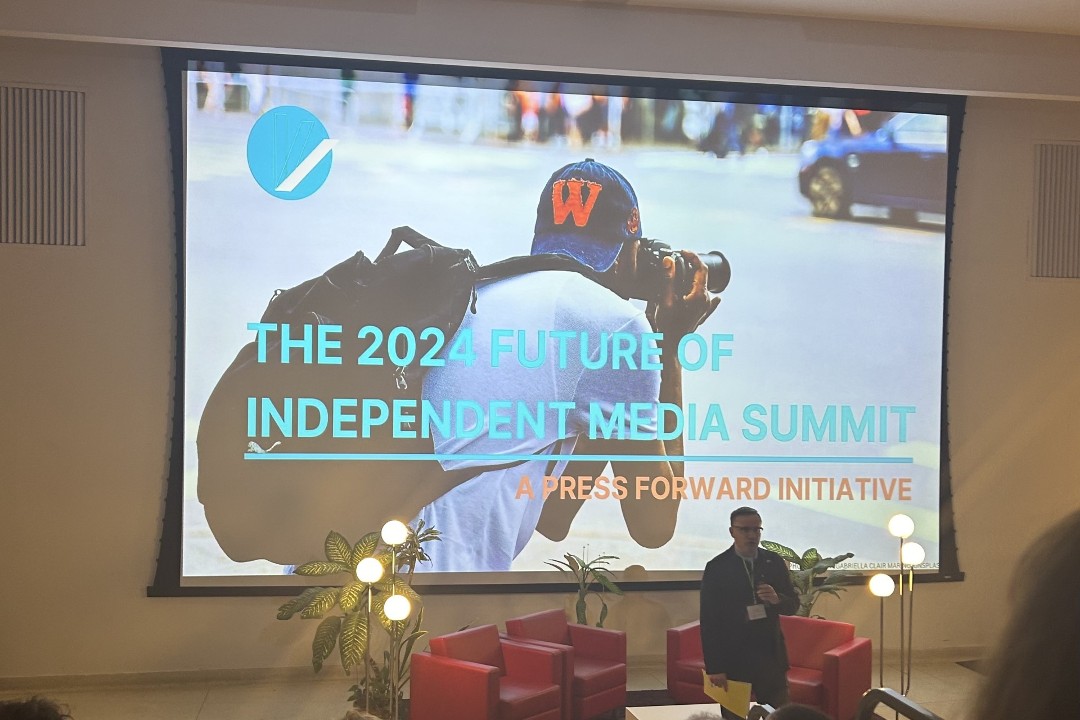
Press Forward board member Brent Jolly addresses the crowd at the Future of Independent Media Summit in Toronto on Oct. 26, 2024. (Karen Unland)
On Oct. 26, Press Forward hosted the first Future of Independent Media Summit, convening journalists, news entrepreneurs, and others interested in independent media to explore what’s working, what’s been challenging, and what can be done to ensure sustainability. The gathering sparked a lot more ideas than I have room to list, but here are some takeaways:
There is a desire to shift the narrative from doom-and-gloom to optimism, and lots of reason to do so.
Philanthropic organizations in Canada are increasingly interested in bolstering community-based journalism, but we’re a long way from an ecosystem as robust as that in the U.S. (in which the very different American organization called Press Forward is a player).
Philanthropic institutions and others who can help care about strengthening community — that’s what the pitch needs to be, not “Help us save journalism.”
Reader support is vital, not only as a revenue source but to demonstrate to other potential funders that our work is valued and makes a difference.
In order to carry out this work and look after the people who do it, independent media organizations need to be financially stable, which requires multiple revenue streams.
The summit was a chance to meet new people and reconnect with old friends, including Trish Audette-Longo, who instigated the event at which Taproot co-founder Mack Male and I first announced our intention to start Taproot in May 2016. A very nice full-circle moment!
An update on Google funding
A huge topic of discussion at the summit and the subsequent Press Forward strategy session was the fate of the annual payment of $100 million that Google had committed to make to a collective of news publishers in response to Bill C-18, which became the Online News Act. All we knew on the weekend was that distribution of the funds was awaiting a CRTC decision on whether to exempt Google from the Online News Act’s requirement for tech platforms to pay for content shared on them.
On Oct. 28, the CRTC granted Google a five-year exemption and ordered the first $100 million to be released to the Canadian Journalism Collective to distribute the funds to eligible news outlets. Taproot is in line for some money from this, based on the number of full-time journalists we had in 2023 (which is fewer than we have now). Unfortunately, the CRTC ruled that freelancers’ hours will not be included, which potentially cuts into the amount we’ll get and is even more detrimental for some of our Press Forward colleagues.
News Media Canada, which represents legacy media such as Postmedia and other newspaper chains, lobbied hard to exclude freelancers. This demonstrates the importance of a voice for those who are trying to forge a new path rather than clinging to the old ways, and we clearly have some work to do to on this front.
On the other hand, Taproot has long preferred to seek revenue from places where we have more control — selling memberships, sponsorship, advertising, and related services — rather than relying on grants. Based on what we heard at the summit, this continues to seem wise, particularly given the federal Conservatives’ opposition to subsidies for journalism and the strong possibility of a change in government when Canadians next go to the polls.
This is a good time to remind you that the other result of the passage of the Online News Act was Meta’s decision to ban Canadian news links from Facebook and Instagram. Most of our distribution is by email, so this wasn’t a deadly blow for Taproot, but it is bothersome that we can’t share great work like our Housing Complex project in the places where a lot of Edmontonians spend their time. And it’s frustrating to see news-esque posts from sites without any of the hallmarks of responsible journalism.
Your contributions make a big difference
If you value Taproot and can afford to support it, we need you to do so. Membership fees not only provide capital to invest in the people who do the work, but they’re also a powerful signal to other funders that we are fulfilling a need. Individual memberships are $100 a year or $10 a month. We also now have business memberships.
If you’re not in a position to pay, please recommend Taproot to others. More readership is also a signal, and it helps us make the case to advertisers and sponsors that their money is well-spent.
The Edmonton region is facing a significant challenge: a lack of coverage of the people and organizations shaping our community’s future. With fewer resources dedicated to telling these important stories, everyone is missing out on vital information.
At Taproot Edmonton, we are committed to informing and connecting people across the Edmonton region through original reporting, newsletters, podcasts, and our recently launched events calendar.
Today, we are excited to introduce our new Business Membership program, designed to enlist the business community’s help to fill the knowledge gap and thus build a more informed and connected community.
Why is there a lack of business coverage?
Since 2008, nine local news publications in Edmonton have closed and another seven have decreased their coverage, according to the Local News Research Project. Just four local news publications have launched during the same period, including Taproot Edmonton.
The situation across the region is even more dire, where existing publications were much smaller to begin with. In addition to local news, we’ve also lost business-focused publications such as Alberta Venture.
These were the headlines in March 2017 — things have only gotten worse since then. (Mack Male/Flickr)
In the past, local news outlets published more stories about what businesses and other organizations were up to. But as their resources have shrunk, business coverage has tended to fall by the wayside as assignment editors focus on what they consider core subjects: crime, politics, and sports. As a result, there are few if any local beat reporters in our region focused solely on business.
We need a more intentional approach to ensure that local stories of innovators, entrepreneurs, and changemakers are told.
For example, we already pay more attention to local business than anyone else. We publish dozens of original stories about business every month, and we publish the Business Roundup every Friday morning. News about local business and economic development is also a key part of several other roundups, including the Tech Roundup and the Regional Roundup.
Business is often discussed on our weekly municipal affairs podcast, Speaking Municipally, and in the past we have published an entire podcast focused on local innovation businesses (and we’re interested in reviving that).
We reach thousands of people every day through The Pulse and our other publications. Every time another local publication follows our story with their own version (which happens with increasing frequency), more people learn about the Edmonton region.
But imagine the impact we could have with more resources to boost local news coverage and grow our audience.
What is the Business Membership program?
We want to enlist members of the business community as partners in our effort to enhance local news coverage and broaden our reach. By purchasing a business membership, you help ensure ongoing, smart, comprehensive coverage of the local community and support the infrastructure needed for continuous storytelling.
We offer four membership tiers:
Starter (up to 15 employees): $100/person per year
Small (up to 49 employees): $1,500 per year
Medium (50-199 employees): $3,500 per year
Large (200+ employees): $7,500 per year
Each tier allows you to add your team members to Taproot’s mailing list. That means they’ll be better informed and connected, and it helps us grow our audience.
The financial support and increased readership will help a great deal, but we also want to hear from you about what you’re seeing in the local news ecosystem. We plan to host a quarterly summit for business members to discuss gaps, challenges, and ideas.
What are the benefits of joining the Business Membership program?
As a business member, you will:
Support local journalism and ensure that important local stories are told.
Equip your team with the latest news and events in the Edmonton region.
Enhance your brand’s visibility through recognition in our newsletters and on our website.
Receive advertising credits for use in Taproot Edmonton’s publications.
Optionally participate in quarterly summits to discuss gaps and challenges in the local news ecosystem.
In short, you’ll be making a significant contribution to a more informed and connected Edmonton region.
How can my business sign up as a member?
To join, simply fill out this form with your business name, contact information, and preferred membership tier. Then we’ll follow up to activate your membership.
How will you use my membership fees?
We’re a business too, so we understand you expect value for your investment.
We will invest membership fees primarily in marketing and product development to grow our audience and enhance our offerings. This will in turn broaden our reach and impact, which will help us attract more members, sponsors, and advertisers. That’s the flywheel we’re trying to get spinning to support local journalism in the Edmonton region.
Does this mean Taproot will only write positive things about business?
No, our allegiance remains to the reader, regardless of where our revenue comes from. We will continue to cover all aspects of the business community, including challenges and opportunities for improvement. We adhere to the ethics guidelines published by the Canadian Association of Journalists and believe that transparency is key to building and maintaining trust with our readers, members, and other stakeholders.
What if I don’t have a business?
We invite you to join Taproot Edmonton as an individual member. For just $100 per year, you can support local journalism for the Edmonton region. Learn more and sign up here.
Who can I contact for more information?
For more details or to discuss further opportunities, please reach out to Mack Male and Karen Unland:
Mack Male — mack@taprootpublishing.ca — 780-619-3864
Supporting local journalism is crucial for maintaining a vibrant, informed, and connected community. We encourage you to become a business member today to help us boost local storytelling in the Edmonton region.
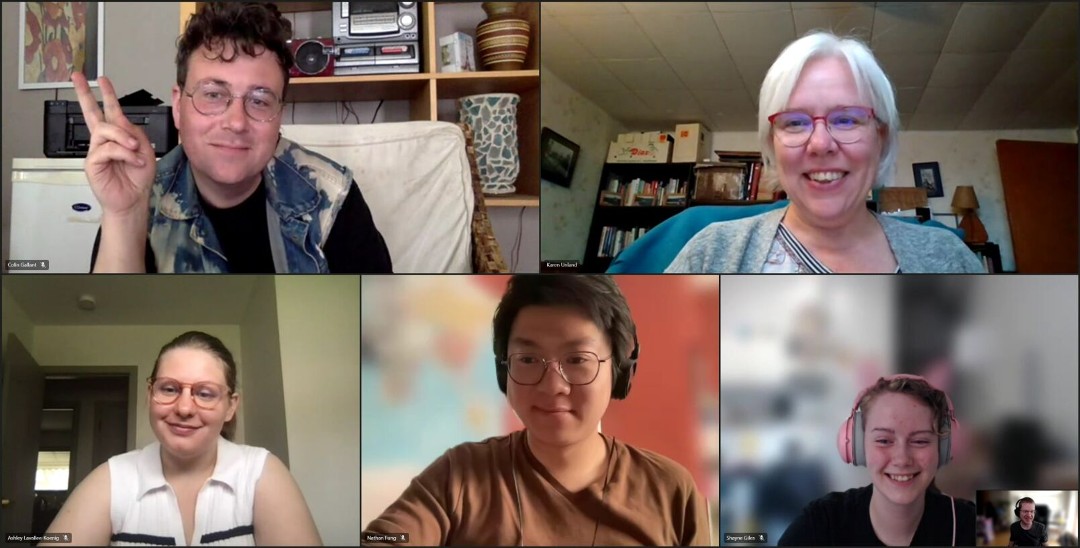
A team meeting from May 2023, with (clockwise from top left) reporter Colin Gallant, editor-in-chief Karen Unland, publisher Mack Male, reporters Shayne Giles and Nathan Fung, and editorial assistant Ashley Lavallee-Koenig.
Taproot Edmonton finds itself in the excellent company of The Appeal, Dallas Free Press, and Santa Cruz Local in the operational resilience category, which recognizes outlets for “establishing processes, policies, and a company culture designed to support staff and manage growth in order to prevent burnout among the very people whose talent and buy-in are critical to their success.”
We’ve done a ton of work over the past year to make Taproot a healthy and supportive workplace. It’s hard to do that while you’re building a business and publishing daily, but it’s absolutely vital to look after the people who do the work. We’ve learned some hard lessons on the way to that realization, and we’re still learning. But we’ve made progress, thanks to excellent coaching from Bene Cipolla via the GNI Startups Lab on building and managing a team as well as wise counsel from our mentors at the ThresholdImpact Venture Mentoring Service. This has led to solid practices to help everyone on our team uphold our core values: curiosity, courage, and care. When people are struggling, we lift them up. When they’re excelling, we cheer them on.
It feels great to be recognized for what we’ve developed, but honestly, the best reward is when we have our weekly team meeting and everyone enthusiastically participates in our wellness check. The practices we’ve adopted helped us onboard two interns and a Canada Summer Jobs hire, integrating them with our regular staff to form a cohesive team. A shared vocabulary for meaningfully answering the question “How are you?” and a concerted effort to listen have helped us knit people together, even though we are rarely if ever in the same room.
(By the way, we’re planning to hire soon. If you’re an experienced journalist based in Edmonton or willing to move here, and you’re looking to work for an organization that genuinely cares how you’re doing, keep an eye out for our posting.)
As is our custom, Taproot Edmonton is about to take a two-week publishing break so we can catch our breath and be strong for the rest of the year. We’ll publish The Pulse and our roundups until Aug. 18, then we’ll be off until Sept. 5. You can expect a couple of episodes of Speaking Municipally during the break, however, as city council will be back in session and our civic affairs podcast will have things to say.
If you like what Taproot is doing and would like to help us go further faster, become a member or a sponsor. And if you know someone who wants to better understand what’s going on in Edmonton, tell them about us. (It looks like we won’t be able to rely on Meta for that.) We’re building what comes next in local media, and we’re working hard to make sure it’s better and healthier than what we’re replacing.
Karen Unland, Taproot’s co-founder, is bringing her perspective as a leader of an independent journalism startup to the future of ethics guidelines for Canadian journalists.
Karen has served on the Canadian Association of Journalists (CAJ) ethics advisory committee since September 2021. Board-appointed, the committee exists to provide advice on ethical issues faced by Canadian journalists in their regular work. Its 11 members, drawing on experience in independent and mainstream media and academia, meet about once a month to discuss key issues and develop policy and discussion papers.
“Something that has emerged, for me,” said Karen, “is an appreciation of how smart the committee members are and how deeply they think about these issues. It is intellectually stimulating to have these discussions.”
Karen said the committee offers a space for “sober second thought away from the thrust of daily decision-making” and allows members to thoroughly interrogate the profession’s foundational principles and practice. One recent discussion paper, for example, sought to define the meaning of journalism to capture dramatic transformations and growing diversity in the kinds of activities that could be considered journalistic work.
In early 2023, Karen joined a subcommittee to review the CAJ’s Ethics Guidelines. This widely cited document, which is designed to help new and seasoned journalists hold themselves accountable for their professional work, has not been updated since 2011.
“This is the sort of topic that I like to nerd out about,” said Karen. “Although I am not the only representative of independent media, I thought it would be valuable to bring perspective from someone working in an emerging newsroom and running a journalism business.”
Taproot co-founder Karen Unland moderated a discussion on updating CAJ’s ethics guidelines at the 2023 CAJ conference in Vancouver. (Supplied)
Karen’s participation also took her to Vancouver in mid-April for the CAJ’s annual conference. She moderated a panel featuring fellow committee members Pat Perkel and Anita Li. Perkel is a former executive director of the National NewsMedia Council and a veteran of small newsrooms in northern Ontario; Li is the founder of a hyperlocal community-driven publication called The Green Line and a journalism innovation newsletter called The Other Wave. They outlined how they are approaching the revision of the ethics guidelines and solicited opinions for working journalists in the audience about how they use them.
Taproot is helping to shape the future of the industry
Karen said she is approaching the review of the ethics guidelines in much the same way as Taproot approaches its work, by focusing on the end user. That means considering how to make the guidelines as useful as possible to journalists who may be working in new newsrooms or depleted ones that lack institutional memory or robust policies of their own.
“I think we’ve made some really decent progress around updating the guidelines for the world we find ourselves in right now,” said Karen, “and future-proofing them a bit for things that come along that we can’t yet anticipate.”
Karen is grateful to the CAJ for this opportunity to take part in national conversations shaping the future of our industry.
“We want to reassure our readers that Taproot is here for the long haul,” said Karen. “We conduct our work the best we can and with a view to continuous improvement. Because of this, we are increasingly able to access opportunities and share what we know and learn with others.”
Correction: This file has been updated to more accurately describe The Green Line.
Without amendments, Bill C-18 risks disproportionately benefitting large news organizations and shutting out digital startups and independent media.
When the Liberal government announced its intention to support Canada’s news industry, the reasons given were to sustain local journalism, support innovation in news, and ensure diversity in the news industry. Bill C-18, the Online News Act currently before Parliament, guarantees none of these things.
Four key changes are needed if Canada is to have the vibrant journalism citizens need for a healthy democracy.
We are a coalition of independent Canadian news publishers, pushing for amendments to C-18 to ensure the bill lives up to its promise to strengthen Canadian journalism. We represent over 100 outlets serving communities coast to coast to coast and employing over one thousand journalists. Taken together, our readers and listeners number in the many millions. Many of us have risked personal capital, fundraised from our communities, and built newsrooms from scratch to reach underserved audiences, many at the local level.
Collectively, we represent Canada’s most innovative digital news media, local news outlets, both French and English language media, and BIPOC-led news media — we are the innovative news organizations that are rebuilding the local news ecosystem. The Online News Act represents an opportunity to accelerate this innovation and progress.
We have come together to ask for basic fairness in Bill C-18.
The centrepiece of Bill C-18 is a funding model aimed at mandating large web platforms like Facebook and Google to compensate Canadian news organizations for posting content on their platforms. Unfortunately, as it is currently structured, Bill C-18 does not specifically direct funding towards supporting the critical work of journalists. The bill also lacks robust transparency mechanisms and, most importantly, it risks leaving out small, medium size and independent publishers.
Even before it was tabled, Bill C-18 has resulted in winners and losers in the news industry. There have been a series of secret, backroom deals between Big Tech and the largest newspapers in Canada, along with a handful of small- to medium-sized publishers. An unintended but likely consequence of Bill C-18 as currently structured may be to cement these inequities and this secrecy, which threatens the public’s already-frayed trust in journalism.
To be clear, we support the goal of creating a sustainable news industry. It is not too late for the current legislation to address the needs of the Canadian news media ecosystem. We want it to be amended to ensure the following:
A transparent, fair funding formula
A universal funding formula should be applied consistently to all qualifying news organizations. This funding formula should be disclosed, and the public must know which news organizations are receiving money from tech companies.
Support for journalists
Compensation from tech platforms should be based on a percentage of editorial expenditures or the number of journalists that work for an organization, inclusive of freelancers.
Inclusion
Bill C-18 may exclude dozens of important news innovators by demanding employee thresholds that news startups often don’t reach until their 3rd or 4th year of operation.
No loopholes
Bill C-18 currently includes vague and poorly-defined criteria allowing for “Exemption Orders” that could let Big Tech off the hook, benefitting a few large news organizations and shutting out hundreds of legitimate small to medium size newsrooms.
While we recognize the reality of the wider news crisis, our organizations represent rays of hope, and are proving that there is a future for a dynamic, inclusive news ecosystem in Canada.
Bill C-18 is modeled after Australia’s News Media Bargaining Code. It must not repeat the mistakes of that legislation. In Australia, an estimated 90 per cent of negotiated revenues flowed to the three largest media companies.
We encourage the government to revisit and improve Bill C-18.
As small, medium size, and independent news publishers, this new legislation is too big, and too important, to fumble. Bill C-18 will have a massive impact on the future of journalism and news in Canada.
Let’s make sure we get it right.
UNDERSIGNED
Arsenal Media
Canadaland
Canada’s National Observer
Constellation Media Society
Discourse Community Publishing
Indiegraf
Metro Media
Narcity Media
Neomedia
Overstory Media Group
Politics Today
Village Media
Alberta Today
BarrieToday
BayToday
BC Today
BradfordToday
Burnaby Beacon
Calgary Citizen
CambridgeToday
Canada’s National Observer
Capital Daily
ChrisD.ca
CollingwoodToday
ElliotLakeToday
EloraFergusToday
Enbeauce.com
EnergeticCity.ca
francoischarron.com
Fraser Valley Current
Guelph Politico
GuelphToday
Harbinger Media
IndigiNews
InnisfilToday
insideWaterloo
Journal Metro
La Converse
Mabeauce.com
Macotenord.com
Magaspesie.ca
Metro Ahuntsic-Cartierville
Metro Beauport
Metro Charlesbourg
Metro Cote des Neiges & NDG
Metro Hochelaga Maisonneuve
Metro IDS-Verdun
Metro L’Actuel
Metro L’Appel
Metro L’Autre Voix
Metro Lachine & Dorval
Metro Lasalle
Metro Le Jacques Cartier
Metro Le Plateau Mont-Royal
Metro Mercier & Anjou
Metro Montreal-Nord
Metro Ouest-de-L’ile
Metro Outremont & Mont-Royal
Metro Pointe-aux-Trembles et Montreal-est
Metro Quebec
Metro Riviere-des-Prairies
Metro Rosemont-La-Petite-Patrie
Metro Saint-Laurent
Metro Saint-Leonard
Metro Sud-Ouest
Metro Ville Marie
Metro Villeray–Saint-Michel–Parc-Extension
MidlandToday
Monjoliette.com
Monlatuque.com
Monmatane.com
Montemiscouata.com
Monthetford.com
Monvicto.com
MTL Blog
MuslimLink.ca
Narcity
Neomedia Chambly
Neomedia Joliette
Neomedia Laval
Neo
media Rimouski
Neomedia Rive-Nord
Neomedia Saguenay
Neomedia Sorel-Tracy
Neomedia Trois-Rivières
Neomedia Vallée du Richelieu
Neomedia Valleyfield
Neomedia Vaudreuil
New West Anchor
NewmarketToday
Northern Ontario Business
Nouvelles d’Ici
Oak Bay Local
OakvilleNews.org
OrilliaMatters
Ottawa Sports Pages
Parliament Today
Peterborough Currents
PressProgress
Queen’s Park Today
rabble.ca
Ricochet Media
SooToday
StratfordToday
Sun Peaks Independent News
Taproot Edmonton
The Breach
The Coast
The Discourse Cowichan
The Discourse Nanaimo
The Flatlander
The Green Line
The Home Pitch
The Hoser
The Independent
The Line
The Local
The Peak
The Resolve
The Ridge
The Rover
The Sprawl
The Tyee
The Westshore
The Wren
Tri-Cities Dispatch
Tribe Magazine
Vancouver Tech Journal
Vocal Fry Studios
Women’s eNews
Want to add your outlet to this letter? Fill out this form to express your interest.
Edmonton’s city council passed a motion on June 7 that we didn’t cover over at Taproot Edmonton, but we certainly took note of as a local media company.
The motion, made by Coun. Ben Henderson and seconded by Coun. Scott McKeen, carried 13-0. Here’s what it says:
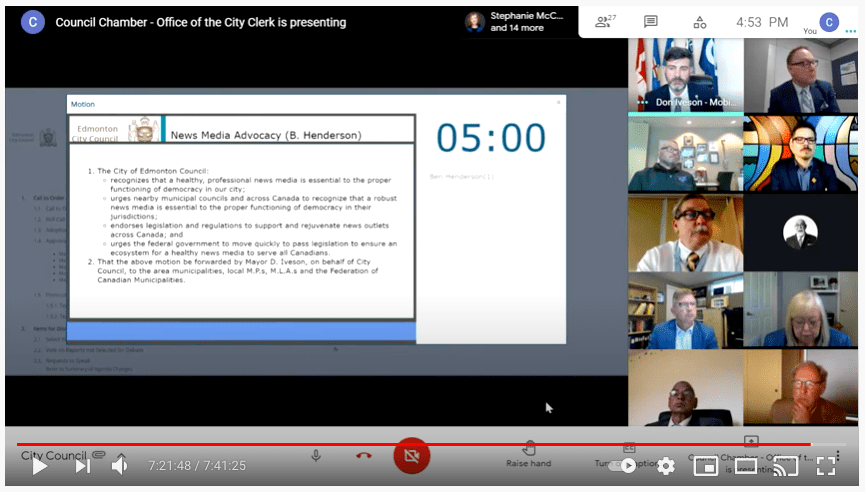
The City of Edmonton council recognizes that a healthy, professional news media is essential to the proper functioning of democracy in our city; urges nearby municipal councils and across Canada to recognize that a robust news media is essential to the proper functioning of democracy in their jurisdictions; endorses legislation and regulations to support and rejuvenate news outlets across Canada; and urges the federal government to move quickly to pass legislation to ensure an ecosystem for a healthy news media to serve all Canadians.
Edmonton City Council meeting, June 7, 2021
Henderson said similar motions have been passed by municipalities across the country. This campaign coincides with an effort by News Media Canada to step up pressure on the federal government to pass legislation to "rein in" Google and Facebook before Parliament rises for the summer amid anticipation of a fall election. The newspaper lobby would like something similar to what Australia passed earlier this year requiring Google and Facebook to negotiate compensation agreements with publishers.
Henderson said he didn’t know the specifics of the federal legislation. Nonetheless, the motion passed unanimously. That struck me as odd, but judging from the discussion, councillors were motivated by a desire to get on the record their recognition of the importance of local news coverage and the role that it plays in helping them do their job.
Fair enough. We agree that a healthy news media is essential to the proper functioning of democracy, and it means something for politicians to say that out loud, because they are often criticized by said media.
We should consider, however, whether the proposed cure is worse than the disease. As Joshua Benton pointed out in Nieman Lab, what happened in Australia is not all it’s cracked up to be. A bill in the Senate that aims to force the tech giants to pay royalties to Canadian journalism organizations is similarly flawed, as was eloquently explained by Sen. Paula Simons (a former Edmonton Journal colleague of both mine and McKeen’s) in a piece for The Line. It’s not clear that such a use of Canada’s copyright law would work, and even if it did, it would favour the incumbents. "At what point is it actually unfair to help big companies like Postmedia and Torstar and Bell Globe Media, while making it harder for new start ups and innovative news platforms to get a start?" she wrote. "Is there a point at which we simply have to acknowledge that the era of the big legacy newspaper companies is over?" In Taproot’s view, we have indeed reached that point.
A screenshot from the June 7 meeting where city council called on the federal government “to ensure an ecosystem for a healthy news media to serve all Canadians.”
Council can take action itself
At any rate, there’s not much we can do to influence what the federal government decides to do or not do on this file. However, there is action that our municipal government could take to strengthen the health of local journalism in our city.
The City of Edmonton buys a lot of advertising. Between 2008 and 2018, it spent well over $7 million on ads in the Edmonton Journal, and council’s executive committee agreed to renew an agreement for up to $3.5 million more over three years in November of 2018. We know these figures because the contract is big enough to have to go to council for approval. That agreement ends on Dec. 31, 2021.
A substantial proportion of that amount had been for "legally required advertising" — certain notices that the Municipal Government Act used to require the City to place in the main local newspaper. The act no longer requires this, and in October of 2019, city council passed a bylaw providing "alternative methods for advertising proposed bylaws, resolutions meetings, public hearings, and other things required to be advertised by the City." Now most of that legally required advertising can appear on the City’s website instead of in paid ads in the Edmonton Journal.
While the ostensible reason for advertising in the Journal was to reach a substantial proportion of the population as required by the MGA, the actual outcome was to subsidize Postmedia — a debt-ridden, Toronto-based company that has continually cut local journalism — in a way that has been unavailable to any of its competitors. What Taproot co-founder Mack Male told executive committee in 2018 remains true today: "Paying Postmedia for legally required advertising is effectively a subsidy to a single outlet. The opportunity here is to consider whether that subsidy should be reduced and whether it could be spread across multiple outlets, especially those who will invest the money in building a brighter future for journalism right here in Edmonton."
The City no longer has to spend as much on print ads as it used to, and its current agreement expires at the end of this year. It still has to make sure as many people as possible know what it is up to. And council just passed a motion saying that healthy local media outlets are vital to democracy. So this seems like an excellent time to use that spending power in a way that accomplishes these goals. Even a fraction of what has been allocated for advertising in Postmedia would make a huge difference to local media outlets like Taproot that inform the community and are part of the connective tissue that makes a city work.
To be clear, the City wouldn’t be buying influence with such purchases. Postmedia’s journalists feel free to criticize city council and administration, and so would Taproot’s and those at any other reputable media outlet. If there were strings attached to that money, we wouldn’t take it, and I don’t see any evidence that the City has or wants such strings. Some outlets choose not to sell any advertising at all; we do, with a clear moral compass that directs us to give up revenue if it puts the integrity of our journalism at risk.
And one more thing: With so much of the City’s communications now taking place on its own website and social media channels, it seems plausible that an ever-larger proportion of the advertising budget will go to search engine marketing and social media marketing. This is the advertising world we live in now, and it is why Google and Facebook have eaten newspapers’ lunch. But if council truly believes that something should be done to support local journalism, then it shouldn’t send all of its advertising budget to the tech giants either. Spend some of it here on the local media ecosystem.
We’re pleased to announce that we’ve received funding from the Investment Readiness Program, administered by the Community Foundations of Canada, to better understand and reach the market for the product that largely funds our social purpose organization.
We now have $23,500 to spend on market research and the development of a marketing plan for our briefings service, the innovation we’ve come up with so we don’t have to rely solely on membership or sponsorship to fund our local journalism operation. We’ve engaged Purppl to help us figure out who needs what we sell and how to connect with them.
How is Taproot a social purpose organization?
A social purpose organization, or SPO, is "a nonprofit, a charity, a co-operative, a social enterprise for-profit, or a hybrid structure with a clear social, environmental, and/or cultural mission at the core of their operation," says Innoweave.
As Futurpreneur puts it, it’s simplistic to imagine a dichotomy between profit-maximizing businesses versus charities that maximize social and environmental returns. Rather, it’s a continuum:
We’re in that blended returns zone as a for-profit company that exists to achieve social benefits, i.e. a more informed and connected community through sustainable local journalism.
What good do we do?
We believe a city works better when its people are informed about what’s going on and feel a sense of connection with each other. Local journalism plays a role in that, and the way we do it is particularly geared towards that.
The UN Sustainable Development Goals have become a guiding principle in the social enterprise space. Certified B Corporations measure themselves against the SDGs, and ventures applying for SheEO indicate the SDGs they are working on, for example.
This is why our journalism is free to read, even though it isn’t free to make. It’s also why we don’t have a business model that relies on traffic (and thus outrage). And it’s why we have embarked on projects like the People’s Agenda, even though there is no direct revenue from such endeavours.
So how do we pay for it?
As we’ve said before, our business model has three streams: membership, sponsorship and advertising, and our briefings service. The first two are pretty conventional in the media business, though even there, we differ from many legacy media outlets in that we don’t put a paywall on our stories and we don’t sell the kind of advertising that follows you around the internet.
Our third revenue stream is this business-to-business service we sell. It is separate from the journalism side, but we apply the same technology and methodology to pay attention to and convey what’s going on. We simply shift our focus to the topics or communities that our clients are curious about, which they then use for internal intelligence or external communications, or both.
This suits us better than other revenue streams that media companies have pursued, such as sponsored content or events. It’s definitely more aligned with our goals than, say, an online casino. And it has made it possible for us to hire journalists and advance our ambitions beyond Edmonton much more quickly than we would have been able to if we relied solely on membership and sponsorship.
We’re grateful to have access to the IRP grant to further develop that side of our business, and we’re pleased to have yet another signal that we’re onto something.
Doug asked about how Taproot came about, so I went all the way back to when Mack Male and I first met, when I was working as the digital editor at the Edmonton Journal, and he was a blogger who had started a podcast company before most people knew what that was.
If you want to know more about how Taproot came about, check out our full origin story.
Something that travels
You’ll often hear me talk about "a thousand flowers blooming" as we try to figure out how to ensure we continue to have local journalism as the legacy media players shrink. No one knows what will work, which means that anything might. We are one of those flowers — one of many startups trying to figure out the future. As I’ve indicated before, we’ve built a business model that allows us to do more than just create jobs for ourselves, which gives us some confidence that we can not only live but grow, and do the same for others.
Many have accepted as orthodoxy that digital news startups are too small to replace what’s being lost in the mainstream. "Hundreds of news outlets have shut down or reduced service, and digital news startups are too small to fill the gap," the Public Policy Forum’s Shattered Mirror report said in 2017. We certainly are small, but we’re growing, and we have the potential to not only fill the gap but do it better. Why be defeatist? Why not build back better, as they say?
A job to be done
Just about every interview like this touches on variations on "what about fake news?" We agree with our colleagues in legacy media that it’s bad to have stories spreading around that have the veneer of journalism but are unmoored from reality. But newspapers and broadcast outlets are not the only ones in the truth business. We are, too.
It’s also our job to sift through the overwhelming amount of information at our disposal and find the most useful, truthful stuff. We spend our days doing that sort of work, for journalism consumers through Taproot Edmonton and for our business clients through the B2B side of Taproot Publishing.
Our printing press moment
Zooming all the way out, it’s important to remember that we are living in revolutionary times when we consider our media, and it is completely understandable that we haven’t figured out how to deal with the fallout of the arrival of the new means of communication. When I say "our printing press moment," I’m thinking of Elizabeth Eisenstein’s The Printing Press as an Agent of Change, written in 1980 but highly applicable to our current situation.
What I do know is that desperately trying to restore things to how they were pre-internet is not only impossible but also undesirable. News Media Canada insists that only newspapers can ensure that local journalism survives. We disagree. And we have risked much more than the executives in those companies to try to make it so.
Would you like to join us on this journey? You can! Sign up for The Pulse for a weekday look at what’s happening in Edmonton. It’s free to read, because communities require reliable information to function, and paywalls stand in the way of that.
Should you wish to help even more, you can become a member, which helps us continue to do this work (it’s free to read, after all, but not free to produce) and makes it available to those who can’t afford to pay.
And, if you run a business or organization, we have other ways to work together that help you get the word out while helping us continue to serve our community.
Many thanks to Stories and Strategies for the opportunity to expound. Mack and I love to talk about these things, so if you’d like to have us on your podcast or at your event, email us at hello@taprootpublishing.ca.







 Taproot Publishing