Housing Complex wins Collaboration of the Year award

We’re thrilled beyond measure to announce that Housing Complex was named the Collaboration of the Year in the small revenue tier at the 2025 LION Publishers Sustainability Awards, which were presented in St. Louis, MO, on Sept. 3.

Housing Complex, which was made possible with the help of the Edmonton Coalition on Housing and Homelessness, was named a Collaboration of the Year at the 2025 LION Awards. (Jordon Hon)

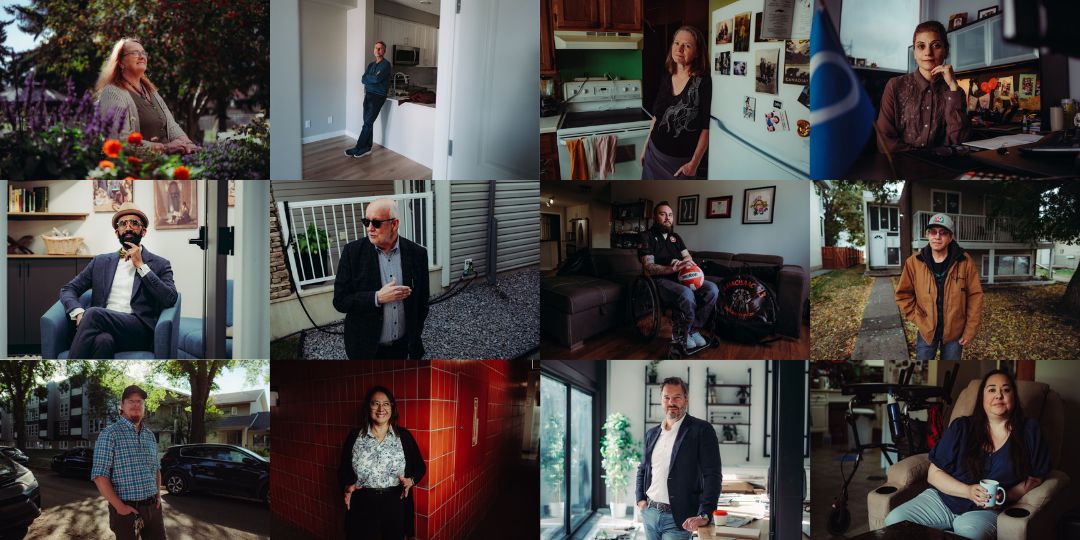
Taproot’s series on what works, what doesn’t, and what can be improved about Edmonton’s housing system was the result of a collaboration with the Edmonton Coalition on Housing and Homelessness. ECOHH helped us secure funding from the Alberta Real Estate Foundation, which made it possible for writer Eric Rice and photographer Jordon Hon to capture the stories of 12 people who play various roles in the housing system. Their careful and empathetic portraits were surrounded by explanatory pieces from Taproot’s editorial team, made up of managing editor Tim Querengesser and reporters Colin Gallant and Stephanie Swensrude; community coordinator Debbi Serafinchon organized the event we held to further engage with the themes explored in the series.

“Hands down, this is a tour de force of the power of collaboration and the power of serving your community with high-quality journalism delivered with care, respect, and depth,” one of the judges wrote. “It is deeply reported and heartfelt. One of the best examples of journalism I’ve experienced in a long time. Bravo.”

LION Publishers is an organization focused on helping local, independent, online news publications in the U.S. and Canada build more sustainable businesses. We’re proud to be among its 575+ members, and it means a lot to be recognized in this way. Congratulations to the other 20 award winners, including our fellow Canadians at La Converse, which won the Community Engagement Award in the small-revenue tier for a video series with residents of under-served communities in Montreal.

Next up is the 2025 municipal election

In some ways, Housing Complex set the table for our 2025 municipal election project, which we are now in the thick of. Many of the issues raised in our award-winning series came up in the 800+ responses to our election question, but of course, many other issues were raised as well.

Taking inspiration from those responses — as well as the further insights gathered at listening sessions, input from our election partners, and our own observations of what Edmonton’s next city council will face — we have put together a 30-question survey for candidates for mayor and city council. Those who have declared their intention to run will receive it soon, and we’ll make sure everyone who is running has the opportunity to respond shortly after nominations close on Sept. 22.

That same week, we will launch our voter matching engine, which will enable you to take the same survey to see how the candidates align with you on the issues that matter most to you. Thousands of Edmontonians used the tool in 2021, and we expect tens of thousands to do the same this time around.

Our journalists have already started digging into various election issues, often drawing on results of our listening work.

We are also excited to partner with the Edmonton Public Library on a mayoral forum, to be held at the Stanley A. Milner branch and online on the evening of Oct. 9. Register to attend, and watch the Taproot Edmonton Calendar for other opportunities to inform yourself ahead of the Oct. 20 election.

A progress report on Taproot’s election project

Much has happened since last we spoke about our election plan, so here’s an update on what we’ve done so far and what’s to come.

A tiny sample of what we heard at the May 22 listening session to dive deeper into the issues that matter heading into the municipal election. (Debbi Serafinchon)

Hundreds of answers to the election question

This entire project begins with an expression of curiosity: What issues do you care about as you consider who to vote for in the 2025 municipal election, and why?.

So far, we have collected more than 550 answers, which is about double what we gathered in 2021. That’s a tremendous start, but we’d love to gather even more. If you haven’t answered the question yet, please do, and spread it around to your friends and family.

Three listening sessions done, two to go

At a series of events dubbed “What’s on your mind, municipally speaking?”, we’ve had some wonderfully engaging conversations. Many thanks to those who joined us virtually on May 14 and in person on May 22 and June 7 to dive deeper into some of the issues that arose in the early responses to our question.

We have been so impressed by the thoughtful input offered, as well as the participants’ willingness to hear out people who have different points of view. We’ve learned a lot, and attendees seem happy to have spent the time.

You can still sign up for one of the two remaining sessions:

  • June 11 at 6:30pm online
  • June 14 at 2pm at The Meadows branch of the Edmonton Public Library

All attendees will receive a little something from our friends at Unbelts. Many thanks to the Edmonton Public Library for hosting our in-person sessions.

More than a dozen election partners signed

We’ve enlisted the help of several election partners to support our effort to equip voters to make confident, well-informed choices.

These organizations have agreed to spread our question, invite people to listening sessions, encourage candidates to fill out our survey, and circulate our voter matching engine. In return, they get a space on our election site to express what issues are important to them.

As of this writing, we have 13 election partners signed on:

We’re in talks with several others, but there’s room for more. If your organization should be on this list, get in touch.

What’s next

The answers to our election question, the input gathered at the listening sessions, and the issues surfaced by our election partners will inform the questions we ask in our candidate survey.

To help us make sense of this enormous pool of data, we’ll be employing AI (specifically, large-language models such as ChatGPT or Gemini). It is the nature of these tools to reflect the biases inherent in their training data — we’ll work hard to mitigate that as we derive the questions we’ll be putting to the candidates.

The questions will not capture every issue we hear about, nor will they necessarily reflect what we hear about most. Rather, the survey will be geared toward municipal issues on which candidates are likely to have differentiating opinions, expressed in multiple-choice answers. This is what we’ll need to build the voter matching engine, which will let you take the same survey and learn which candidates align with you best.

Declared candidates will receive their surveys starting in mid- to late August. We expect to learn about a few more when nominations close on Sept. 22, and we’ll get those candidates their surveys as soon as possible after that. Candidates’ answers will be displayed along with their other information on our election website, (as we did in 2021).

As soon as we have a critical mass of candidate responses, we’ll make the voter matching engine available to use until polls close on Oct. 20.

What you can do

While we’re in the information-gathering phase between now and early July, these are the things to do or spread the word about:

Once the candidate survey is ready to go in August, please encourage the candidates in your ward to fill it out. And watch for the voter matching engine in September.

We’re working with a partner to present a forum for mayoral candidates in Edmonton in the fall — we’ll share details as soon as they’re firmed up. If you are aware of any candidate forums or other related events, in Edmonton or the surrounding region, please submit them to the Taproot Edmonton Calendar.

Finally, if you value this work, become a Taproot member. You’ll be helping us inform, connect, and inspire the community.

What we learned about Taproot’s audience

In early 2025, we surveyed our audience to better understand who Taproot is serving. As we said at the time, we don’t track our readers the way social media platforms and many other websites do, so if we want to know more about you, we ask.

Before we get into the results, let me tell you: It’s lovely to have to ask. When Mack and I started this company in 2016, and for a few years after that, we literally knew most of the people on our mailing list. It wasn’t that challenging to speak with authority about who the typical Taproot reader was. But I’m proud to say we have grown far beyond our own pretty sizeable personal networks, and I don’t know most of the people who read Taproot anymore. That’s awesome.

Hundreds of people filled out the survey we sent in February. Here’s what we found out:

Taproot readers love local

Based on that aforementioned knowledge of Taproot’s early adopters, I have long said that Taproot readers tend to be the kind of people who seek out local goods and services — they know the benefits that come from investing in our own community. Now we have the numbers to back that up: Given a choice between a local product and a non-local one, 76% told our survey they would pay slightly more for the local product, and 15% said they would pay significantly more.

Further to that shop-local ethos, 82% said they had dined at a local restaurant in the past month, and 76% said they had bought something from a locally owned business within the same period.

Our readers are an artsy crew, too. In the previous six months:

  • 52% attended a concert;
  • 50% attended a play, musical, or opera;
  • 46% went to a museum, art gallery, or science centre;
  • 45% attended a festival.

These activities aren’t exclusively local, but where we live, they often are. Interestingly, in this hockey-mad city, only 29% of our respondents said they had attended a professional sports event in the past six months, and 13% said they had never done so.

Taproot readers are grateful to those who support our work

One of Taproot’s revenue streams is sponsorship and advertising, which is another reason we sent this survey. Companies with marketing budgets want to know who they will reach if they buy space in Taproot, and now we have better answers.

We also have evidence that Taproot readers feel warmly towards those who help make all of this information available to everyone. Almost three-quarters said they feel positively or very positively toward the sponsors whose logos appear in every edition of our weekly newsletters. And more than half said that if a company supports Taproot through sponsorship, advertising, or membership, they are more likely to consider their product/service for future purchases.

Taproot readers have deep roots in Edmonton

More than three-quarters of our respondents said they have lived in the Edmonton region for more than 20 years. This surprised me a little, given the population influx we’ve seen over the past few years, and it points to some room for improvement. Reading Taproot seems like a great way for newcomers to get a crash course on Edmonton. We’ve clearly got some work to do to increase awareness among recent arrivals.

Given those demographics, it’s perhaps not surprising that 79% own their own home, and 32% said their annual household income exceeds $150,000 a year. About two-thirds of our respondents are employed, and 26% are retired. They’re educated, too: 45% have an undergraduate degree, 30% have a graduate degree, and 16% have a college diploma or certificate.

Taproot makes a difference

We asked readers to indicate the degree to which they agreed with a series of statements, and the results were gratifying:

  • 95% said Taproot helps them be engaged citizens;
  • 87% said Taproot makes them think;
  • 87% said Taproot pays attention to things they care about;
  • 82% said Taproot gives them something to talk about;
  • 78% said Taproot provides information they can’t find elsewhere;
  • 77% said Taproot helps the Edmonton region work better;
  • 61% said Taproot saves them time.

That’s what we’re going for, so it’s good to see we’re succeeding in the minds of many readers. There’s some room for improvement here, too, which is helpful to identify.

The point of the survey was to up our quantitative game, but I’m going to conclude with some qualitative data. The survey included an open-ended question: “What else would you like us to know?” Here’s a small sample of what people said:

  • “I love Taproot, it has made me more engaged in the city I love. Thanks for all the wonderful work!”
  • “I am so grateful for the local, insightful coverage you provide of things happening in the city. Your city hall reporting is stellar and your support of local entrepreneurs, artists and social causes is the only way I keep in touch with what’s new and important to me. You help me stay connected, interested and engaged.”
  • “I love having the daily local perspective of Taproot. I feel like a part of my community.”
  • “So grateful Taproot exists so I can stay in the loop on everything Edmonton! Thank you for your engagement and effort.”
  • “I love Speaking Municipally and The Pulse… both make me feel much more connected to and aware of important things happening in the city. Thanks for all that you do.”
  • “I love this as a resource and I share it often, especially to peers and colleagues at work. It’s literally a great way to keep a ‘pulse’ on things without feeling draining. The focus on local news is refreshing and incredibly important.”

These comments are particularly loving, but we also heard about things we could do better, and that’s beneficial, too. Thanks to all who let us know more about who you are and what you care about.

One more thing

A few readers told us that as much as they love Taproot, they can’t afford to pay for a membership. “I really value Taproot and, when I make more money, I intend to support y’all financially,” said a student who responded to our survey. We heard similar sentiments when we asked about membership benefits in 2024.

If you can’t afford $100 a year or $10 a month for Taproot, that’s OK. We have no paywall on purpose. Our mission is to inform, connect, and inspire the Edmonton region, and making our work available only to those who pay would work against that. So don’t fret. You can help us in other ways:

  • Share our work.
  • Recommend Taproot to a friend. There’s a referral link at the top of every email we send.
  • Encourage your employer to buy ads or an organization-wide membership.
  • Let our sponsors and advertisers know you appreciate their support.

If you can afford to pay for a Taproot membership, please do. Our work is free to read, but it’s not free to make, and we all benefit from a more informed, connected, and inspired community.

Paid members get other benefits, too. Members recently got a chance to win tickets to a concert, and there are more perks in the works. But the main thing is that you’ll be helping that student know what’s going on, even though they can’t spare the cash quite yet. And your money stays here in Edmonton, making it possible for us to keep doing what we do.

The Taproot Mini brings a bit of fun to The Pulse

Taproot now has its own crossword puzzle, bringing a daily dose of delight to The Pulse.

As is the case with everything Taproot publishes, the puzzle is locally sourced. We’re excited to be working with Brandon Cathcart, a crossword constructor who also happens to be a reader of Taproot’s weekday newsletter about what’s going on in Edmonton.

Crossword constructor Brandon Cathcart is the mind behind The Taproot Mini.

“One day, I was like, ‘I think this could use a mini crossword,’” Brandon said of The Pulse. “I think I would enjoy taking a little break after my news updates.”

Now, Brandon was perhaps primed to think this way. He caught the bug for doing newspaper crosswords back when free commuter dailies like Metro were a thing, and he started making his own in high school, about 15 years ago.

But it’s not just Brandon who has seen this opportunity. Crosswords were born in newspapers more than a century ago, and the great success of New York Times Games has persuaded many outlets to revive the tradition of offering diversions alongside the news.

This also aligns with Brandon’s larger project. He recently started YEGwords, which sends a weekly email newsletter with an 11×11 crossword (more challenging than The Taproot Mini), along with commentary for the word nerds among us. He also distributes paper copies of YEGwords puzzles in selected coffee shops and bookstores.

“I want to put something fun into the world that people can find and enjoy,” he said.

It’s a worthy mission. And for the next month, Taproot will be one of those places where Brandon sprinkles some fun. Every day in The Pulse, you’ll see a mini-crossword made just for Taproot readers, always with a few Edmonton-themed clues. Based on what I’ve seen so far, I think you’ll enjoy them, regardless of your puzzling prowess.

“One of the things that I really try to do with my crosswords is make them accessible for people who aren’t familiar with crosswords,” he said, “while still making them fun for people who do.”

Give them a try and let us know what you think! If you don’t already get The Pulse, you can sign up here. We’d love your feedback on the Mini at hello@taprootedmonton.ca.

It’s time to share what’s on your election agenda

Curiosity is at the heart of everything Taproot does, and covering a municipal election is no different. Our approach is not to tell you what we think, nor is it to concentrate on what the candidates promise. We begin by asking what you care about and building our work around that in the months leading up to voting day on Oct. 20.

A placard under the Taproot Edmonton logo with the question "What do municipal candidates need to know about housing in Edmonton?" with index cards on which people have answered that question
We started gathering input during our housing event in November 2024 — now we’re widening the aperture with a bigger question about what’s on your mind heading into the 2025 municipal election. (Flickr/Mack Male)

If you were reading Taproot in 2021, you may remember this approach as the People’s Agenda. We called it that because we drew inspiration from Jay Rosen’s concept of the Citizens Agenda. This method gives journalists a way to ground their work in the issues voters care about, rather than engaging in the “horse race” coverage that is more interested in who’s leading in the polls and other tendencies that reduce politics to a kind of sport.

When we embarked on that project during the last election campaign, we weren’t sure what we would end up with. We just knew we wanted to listen to the people and equip them to make informed decisions. In the end, we figured out a way to be useful to thousands of voters, and we’re ready to do it again, in a bigger and better way, employing the lessons of 2021.

What do we want to know?

Here’s this election’s kickoff question: What issues do you care about as you consider who to vote for in the 2025 municipal election, and why?. It’s an open-ended question meant to capture not only what’s on your mind but also what you want to hear about from the candidates for mayor and council as they compete for your vote. You might want to keep in mind the kinds of issues that are under municipal jurisdiction as opposed to provincial or federal — the City of Spruce Grove has a handy guide — but don’t get too tangled up in that. Speak from your heart.

This year, we are also inviting (but not requiring) you to share the first three characters in your postal code. That’s so we can see if there are any discernible patterns in what matters to people in particular wards in Edmonton or specific municipalities in the metro region.

What will we do with the answers?

The responses will be one of the most important inputs for the Taproot Survey, which we will distribute to candidates so they can indicate where they stand on the issues that are important to you. In 2021, we asked 30 multiple-choice questions reflecting the topics raised in our information-gathering. Some were very specific, such as “Do you think city council should have approved the Epcor’s E.L. Smith Solar Farm?” Others were more general, such as “How much should the city spend to help local business recover from the pandemic?”

Some candidates did not like the multiple-choice format, and to be sure, political questions tend to have nuances that are difficult to capture in four or five standardized responses. But this format makes it possible to let voters take the same survey and find out which candidates they align with. This matching engine turned out to be a powerful way to equip voters with actionable information. It was also a great (and free) way for candidates to make their positions known and find their voters, in a way that can’t be touched by how much money they have raised. We intend to make the matching engine available again.

In 2021, we also synthesized the responses to the initial question into eight sub-questions, such as “Will our taxes be well-spent?” or “Will we act on climate change?” Each of these was the inspiration for an online listening session that yielded Taproot stories and more information to inform the questions in our candidate survey. We have something similar in mind for this campaign as well.

Making sense of all of the information we gathered in 2021 was a challenge given the tools at our disposal. Taproot’s reach has grown significantly since then, and we expect the number of answers we gather will be an order of magnitude greater than what we managed last time. Luckily, we can now harness the power of generative AI to sift through the pile of data and help us understand what’s on people’s minds. No identifying information will be used for this analysis, and humans will oversee every step. But we’re excited to see how quickly we’ll be able to gain understanding with this help. We may also use AI to help us craft the wording of the multiple-choice questions to ensure the answers provide as much clarity on a candidate’s stance as possible.

How are we involving community partners?

This work derives some of its authority from the depth and breadth of the information we gather. We want to hear not only from Taproot’s community but also from those who are outside our orbit, to ensure a large, diverse pool of knowledge. We’ll be working with community partners to get our initial question out to their communities. We’ll also be asking them to encourage candidates to answer the survey and to distribute our matching engine when it’s ready for voters to use.

To help fund the significant amount of work that this entire election project will entail, we will be offering partners the opportunity to pay for access to some of the data we gather. This data will be anonymized and in line with our privacy policy. These paying partners will not have any say over the questions we ask or the way we cover the election; they will simply have access to deeper information than that which we will display to the public. These partners will be listed on Taproot’s election site.

What happens next?

Here’s the timeline we have in mind:

  • March to May: Gather answers to the election question through Taproot’s channels and with the help of community partners;
  • May and June: Hold listening sessions to dive deeper into some of the issues surfaced;
  • July and August: Formulate the candidate survey;
  • August and September: Distribute the survey to all declared candidates;
  • Sept. 22 to Oct. 20: Distribute the matching engine through Taproot’s channels and community partners;
  • Oct. 20: Election Day

Throughout this period, Taproot’s editorial team will continue to publish election-related stories, leaning towards the kind of explanatory work they did as part of the Housing Complex project. Story ideas and pitches can be sent to hello@taprootedmonton.ca. We’d also like to list election forums and related events in the Taproot Edmonton Calendar. Here’s the submission page.

Our election site will have a full listing of every candidate for mayor, councillor, public school trustee, or Catholic school trustee in Edmonton, with links to their websites. We may do the same for candidates in some of the municipalities in the metro region — we’re looking into how much more complexity that may introduce, and will be guided in part by the amount of participation we see from voters in the region.

Given the province’s decision to ban automated vote tabulators, we expect we won’t be able to provide the same kind of real-time results dashboard we’ve made available in previous elections. But we will display the results and the stances of the winning candidates once we know them.

How can you help?

The first thing to do is to answer the question. Once again, here it is: What issues do you care about as you consider who to vote for in the 2025 municipal election, and why?.

Please spread that link to friends, family, and colleagues. The more people we hear from, the better. If you are part of an organization that would like to help us distribute the question, please get in touch with Mack at mack@taprootpublishing.ca.

You’ll notice the question page invites you to opt in to receive email from us, as a subscriber to Taproot in general and/or to receive alerts about the readiness of the matching engine and other election tools. This is optional, and your email address will not be correlated in any way with your answers. We do hope you’ll consider signing up if you’re not already on Taproot’s mailing list.

Finally, as you can well imagine, it’s expensive to do this kind of work. Becoming a paying member of Taproot, either as an individual or as an organization, provides us with vital resources to pay the people who pay attention to the Edmonton region, not only at election time but year-round.

Taproot joins Press Forward, a voice for indie media

Taproot Edmonton is now a proud member of Press Forward, an organization “dedicated to ensuring people in Canada have strong, independent and community-focused journalism.”

We’ve long been aligned with Press Forward’s goals, but we finally made time to apply. (Part of that process involved posting and/or updating our policies on corrections, ethics, diversity, equity, and inclusion, and privacy). We find ourselves among two dozen organizations of various shapes and sizes, which serve their communities and fund their work in a wide variety of ways. What we have in common is a deep connection to readers and members, as well as an interest in innovation.

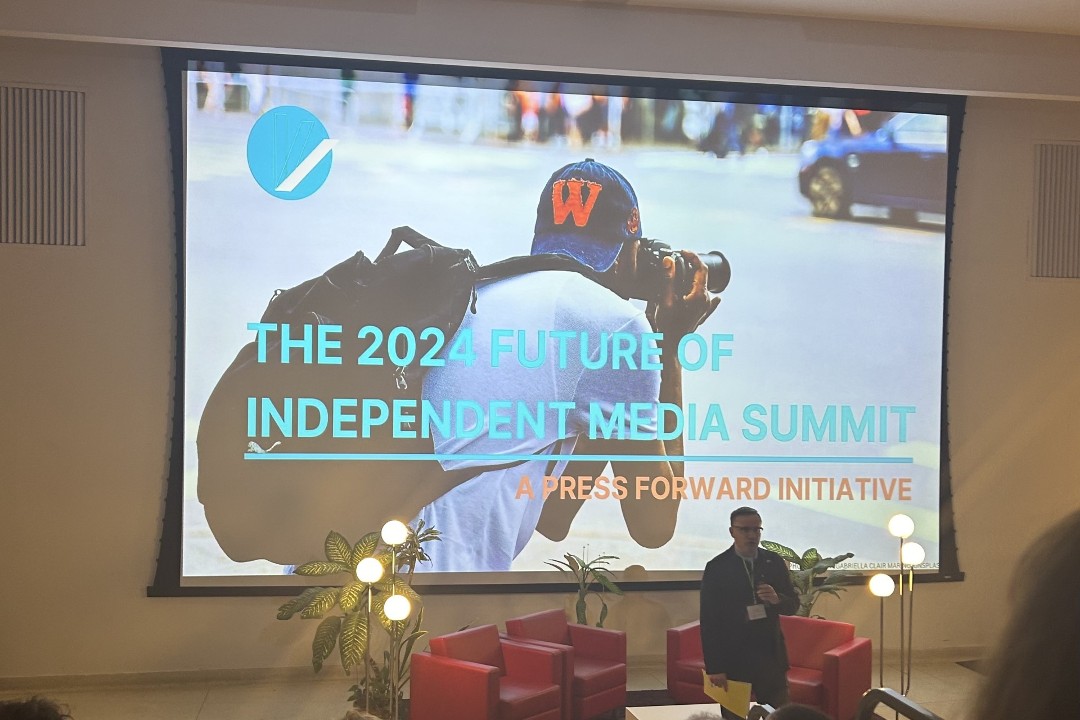
Press Forward board member Brent Jolly addresses the crowd at the Future of Independent Media Summit in Toronto on Oct. 26, 2024. (Karen Unland)

On Oct. 26, Press Forward hosted the first Future of Independent Media Summit, convening journalists, news entrepreneurs, and others interested in independent media to explore what’s working, what’s been challenging, and what can be done to ensure sustainability. The gathering sparked a lot more ideas than I have room to list, but here are some takeaways:

  • There is a desire to shift the narrative from doom-and-gloom to optimism, and lots of reason to do so.
  • Philanthropic organizations in Canada are increasingly interested in bolstering community-based journalism, but we’re a long way from an ecosystem as robust as that in the U.S. (in which the very different American organization called Press Forward is a player).
  • Philanthropic institutions and others who can help care about strengthening community — that’s what the pitch needs to be, not “Help us save journalism.”
  • Reader support is vital, not only as a revenue source but to demonstrate to other potential funders that our work is valued and makes a difference.
  • In order to carry out this work and look after the people who do it, independent media organizations need to be financially stable, which requires multiple revenue streams.

The summit was a chance to meet new people and reconnect with old friends, including Trish Audette-Longo, who instigated the event at which Taproot co-founder Mack Male and I first announced our intention to start Taproot in May 2016. A very nice full-circle moment!

An update on Google funding

A huge topic of discussion at the summit and the subsequent Press Forward strategy session was the fate of the annual payment of $100 million that Google had committed to make to a collective of news publishers in response to Bill C-18, which became the Online News Act. All we knew on the weekend was that distribution of the funds was awaiting a CRTC decision on whether to exempt Google from the Online News Act’s requirement for tech platforms to pay for content shared on them.

On Oct. 28, the CRTC granted Google a five-year exemption and ordered the first $100 million to be released to the Canadian Journalism Collective to distribute the funds to eligible news outlets. Taproot is in line for some money from this, based on the number of full-time journalists we had in 2023 (which is fewer than we have now). Unfortunately, the CRTC ruled that freelancers’ hours will not be included, which potentially cuts into the amount we’ll get and is even more detrimental for some of our Press Forward colleagues.

News Media Canada, which represents legacy media such as Postmedia and other newspaper chains, lobbied hard to exclude freelancers. This demonstrates the importance of a voice for those who are trying to forge a new path rather than clinging to the old ways, and we clearly have some work to do to on this front.

On the other hand, Taproot has long preferred to seek revenue from places where we have more control — selling memberships, sponsorship, advertising, and related services — rather than relying on grants. Based on what we heard at the summit, this continues to seem wise, particularly given the federal Conservatives’ opposition to subsidies for journalism and the strong possibility of a change in government when Canadians next go to the polls.

This is a good time to remind you that the other result of the passage of the Online News Act was Meta’s decision to ban Canadian news links from Facebook and Instagram. Most of our distribution is by email, so this wasn’t a deadly blow for Taproot, but it is bothersome that we can’t share great work like our Housing Complex project in the places where a lot of Edmontonians spend their time. And it’s frustrating to see news-esque posts from sites without any of the hallmarks of responsible journalism.

Your contributions make a big difference

If you value Taproot and can afford to support it, we need you to do so. Membership fees not only provide capital to invest in the people who do the work, but they’re also a powerful signal to other funders that we are fulfilling a need. Individual memberships are $100 a year or $10 a month. We also now have business memberships.

If you’re not in a position to pay, please recommend Taproot to others. More readership is also a signal, and it helps us make the case to advertisers and sponsors that their money is well-spent.

Introducing Housing Complex, a special project from Taproot Edmonton

We’re thrilled to announce the launch of Housing Complex, a multi-part project exploring what works, what doesn’t, and what can be done to improve Edmonton’s housing system.

Starting on Oct. 23, you can read our effort to better understand the complexity of a system that touches all of us and raises issues that candidates will have to grapple with heading into the 2025 municipal election. More stories will be published over the coming weeks, continuing the conversation through National Housing Day and beyond.

Eric Rice interviewed a variety of people about their experiences with the housing system as the starting point of Housing Complex, Taproot’s project on what works, what doesn’t, and what can be done about housing in Edmonton. (Jordon Hon)

For more on what to expect from the series, managing editor Tim Querengesser sets it up well in his introductory piece. I want to take you behind the curtain to explain how this project came about in the first place and why we approached it the way we did.

Our team has working on this series for months, but the seed that grew into Housing Complex was planted even further back in May of 2023. A valued member of our community reached out in advance of the annual homeless memorial service that the Edmonton Coalition on Housing and Homelessness hosts every year in June to honour those who have died from not having access to adequate housing. Could Taproot do something, he asked, to better tell the story of those who had passed? Could we find a way to go beyond the typical coverage of the event, which tends to share a number — a sadly growing number in recent years — but not much about the actual people?

I didn’t know. But it felt like an idea worth exploring. An obituary is a way of saying, “This person mattered.” Perhaps that was a service we could provide and a way to raise awareness of the tragedy happening on our streets. But at a meeting to discuss the idea further, Jim Gurnett of ECOHH gently suggested it could be very difficult to tell a full and dignified story about someone whose life had ended on the street. It would perhaps be more meaningful and useful to focus on those who were still alive.

That idea resonated, but it brought with it other challenges. How could we sensitively gather and tell those stories without engaging in the kind of extractive journalism that exploits people without making their lives better and sometimes makes things worse? I thought of someone who might be able to help: Eric Rice, a writer whose project This is Where We Live was the subject of a Taproot story in November 2022.

Eric interviewed eight people who were homeless or had experienced homelessness. He turned those interviews into monologues that were then performed by professional actors whose age, gender, and ethnicity matched that of the interviewees. He took pains to get his interviewees’ approval of the way their stories would be told. “Each interview transcript was reviewed and highlighted by third parties, their input was used to create scripts, and the scripts were read back to the interviewees before taping,” he wrote of the project, which was originally intended to be a piece of theatre but became a film due to the COVID-19 pandemic.

I sat down with Eric to see if he had any advice on how we might be able to approach a similar project as respectfully as he did. But as we talked, we realized that focusing on the individual stories of people who had fallen on hard times ignored or even erased that the homelessness crisis is the result of a system we are all involved in. I might even have used the word “complicit,” as I was about to put my house up for sale and hoped to get significantly more than what we paid for it when we bought it in 1999. The market helps some and hurts others. To truly tell the story, we needed to widen the scope.

While all of this was happening, Taproot co-founder Mack Male and I were heads-down in the build-the-airplane-while-you-fly-it mode of a media startup. Even if it was a good idea to try to apply Eric’s approach to a broader cross-section of Edmontonians involved in the housing system, Taproot didn’t have the resources to pull it off alone, and it was vital to us that the people engaging in acts of journalism get paid. The good news was that Eric wanted to not only offer advice but get involved, and he was willing to look for the money to help make it possible.

Working with Jim at ECOHH, Eric put together a proposal for funding from the Alberta Real Estate Foundation, a grant-making organization that supports projects that help people better understand issues related to the real estate industry. With ECOHH as the fiscal agent, Taproot as the publisher, and Eric as the project lead, we made a successful case for a $10,000 grant. Then the real work began.

Guided in part by a survey sent to the partners’ communities, Eric came up with a list of the kinds of people he would seek to interview. As was the case with This is Where We Live, he sought his subjects’ approval of the edited interview before publication. This departs from standard journalistic practice and is not something we typically do at Taproot. But we decided it was justifiable, with the disclosure you are reading now, in order to set vulnerable subjects’ minds at ease. We offered the same to interview subjects who we would not describe as vulnerable, as the ethos of the project has been to put everyone on the same level.

The grant also allowed Eric to pay a small honorarium to some of his interview subjects to recognize the value of their time. This was at his discretion. Those whose participation could be seen as part of their job were not compensated; those whose connection to the system was mostly through lived experience typically were. Again, this is not standard practice in journalism, and Taproot does not pay sources. But we were willing in this case to let Eric put part of the grant towards this in a way that mirrored his practice with the previous project.

Eric conducted his first interview on Feb. 28 and his last one on Sept. 25. While that was happening, Taproot’s team grew, and we saw an opportunity to zoom out a bit on the larger issues connected to the experiences of our 12 interviewees. In May of 2024, our civic affairs podcast Speaking Municipally recorded a live show in conjunction with the summer institute of the Canadian Housing Evidence Collaborative. That acted as a bit of a preview for Housing Complex and gave our audience a chance to hear more from both Eric and Josh Evans, associate professor of human geography at the University of Alberta and director of the Affordable Housing Solutions Lab. Some of the questions posed by attendees inspired the explanatory pieces that our editorial team will share with you in the coming weeks — watch for a new story every Wednesday through October and November.

You can find all of the stories that this series led to at Housing Complex, Taproot’s series on what works about Edmonton’s housing ecosystem, what doesn’t, and what can be done to improve it. Many thanks to housing advocate Nadine Chalifoux for welcoming Eric Rice and Jordon Hon into her home, where this doormat greets visitors. (Jordon Hon)

The final piece of the puzzle was how to present all of these words in an attractive and respectful way. Once again, someone Taproot has written about before was able to help: photographer Jordon Hon, whose docuseries about Chinatown was the subject of a December 2022 story. Jordon accompanied Eric to capture portraits of his interview subjects and the ways they live, adding another layer to the storytelling. We’re grateful that the grant allowed us to pair Eric’s careful and perceptive work with Jordon’s beautiful and telling images.

Based on what Tim heard at his listening session earlier this year, Taproot members want us to deliver more original journalism that goes deep, and they want to engage with each other in real life. We hope you’ll consider Housing Complex an example of the former. As for the latter, we’re planning to convene our collaborators, our participants, and the wider Taproot community at an event in November; that will also be an opportunity to learn more about the Affordable Housing Maintenance Fund, an endowment fund that Eric created through the Edmonton Community Foundation to create a stable, ongoing source of funding for the maintenance and repair of low-income housing in Edmonton. Stay tuned for your invitation to join us!

We’re grateful for the Alberta Real Estate Foundation’s support, which allowed us to pay for Eric’s time, Jordon’s photos, and some ancillary expenses. The grant did not cover the explanatory work, the development of the microsite displaying the project, or the coordination of many moving parts — Taproot relies on members, sponsors, and other paying customers to fund all of that.

You can help us continue to do the kind of work that informs and connects our community by becoming a Taproot member. If you’re already a member, please invite a friend to join you. We make all of our work free to read, but it is by no means free to make, and your support makes a big difference.

Readers offer guidance on how to grow membership

“Don’t ask, don’t get.” We often cite those four words from Amanda Wagner, delivered during an accelerator that Taproot co-founder Mack Male and I attended in 2019. This month, that mantra led us to ask for information from the people who read Taproot but are not paying members. Their answers were revealing.

Why did we ask?

Taproot’s journalism has always been freely accessible. We believe a paywall would stand in the way of our mission to inform and connect the Edmonton region. But we have also always made it possible to buy memberships for $10 per month or $100 per year. This was our first revenue stream, and it remains an important source of funding to pay the people who carry out our mission.

About 6% of the people on our current mailing list pay for Taproot memberships. We wanted to better understand what has stopped the 94% from becoming paying members.

What did we ask?

On Sept. 4, we sent them a survey asking them to indicate what has stopped them from becoming paying members of Taproot. We gave them the opportunity to choose up to three responses from a list of reasons:

  • I didn’t know paid membership was an option
  • I don’t know how to become a paying member
  • I don’t get enough value from what Taproot publishes to pay for it
  • Taproot doesn’t offer enough extra benefits to members
  • I can’t afford the current price
  • I reserve my media budget for news outlets with paywalls
  • I am already a paying member under a different email address
  • Someone else in my household is already a paying members
  • I want to know what Taproot publishes but I don’t want to support it
  • Other

We also invited them to tell us more about their answer.

What have we learned so far?

The email containing the survey was opened by about half of the recipients, and of those, about 8% answered it. So this is based on a small sample of our total readership. Still, the responses offered some useful guidance.

We need to improve our communications about membership

The answer with the most responses was “I didn’t know paid membership was an option.” Coupled with a few more responses indicating people knew membership was possible but didn’t know how to buy it, it’s clear that we need to make that option clearer and the path more obvious.

It didn’t take much of a nudge for some of the survey recipients to take the next step and start paying — at least a dozen upgraded to paid memberships shortly after the email went out. We asked and we got!

The Tyee has a message from the publisher at the bottom of every article encouraging readers to become paying members and explaining how they are contributing to free access for all. CKUA makes a similar pitch — you don’t have to pay to enjoy it, but if you do, you contribute to the station’s sustainability. We’ll be taking inspiration from these and other sources as we make our pitch more explicit on the Taproot Edmonton website.

We’ll also update our signup page and integrate information about our new Business Membership, which allows companies to sign up all of their staff, ensuring a well-informed workforce while supporting our efforts to continue to provide that information.

Some might pay if membership cost less

We heard from some people that $100 a year or $10 a month is a heavy lift, especially with so many other subscriptions pulling on the pocketbook.

Membership prices have stayed the same since we launched the first version of Taproot in 2016, aside from an increase when we got big enough to have to charge GST. There wasn’t a lot of science behind the price points we chose. We needed to see if people believed in the idea enough to join; $100 a year or $10 a month was memorable and made for easy math.

Perhaps different membership tiers would make it possible for more people to support us monetarily. A one-time donation option may appeal to some. Or maybe we should take a page from some of our friends in the arts community and institute a pay-what-you-can system. We’ll take it all under advisement.

Also, we know there’s interest in being able to claim the digital news subscription tax credit. Taproot hasn’t been eligible in the past, but we’re getting closer to qualifying, and we hope to have some good news to share before the end of the year.

Some might pay if benefits were beefed up

We don’t do tote bags at Taproot (at least not yet). So what do you get if you’re a member?

Initially, paid members had exclusive access to our “story garden,” a place to plant seeds of curiosity, some of which would grow into full-fledged stories that we would pay freelancers to write. It was an innovative concept, but it was hard to respond to all of the ideas in a timely way, even with a small minority of our members engaging. As our business model and editorial practices evolved, we closed the story garden.

For a while, free readers were limited to two weekly roundups, while paying members had access to as many as they wanted. In 2023, we lifted that restriction (but didn’t ballyhoo the change — if you’re a free reader, go ahead and update your preferences to get as many newsletters as you want, including the new Events Roundup).

Right now, the main benefit of paying for Taproot is the warm feeling you get from knowing you are supporting independent local journalism and making it possible for everyone to consume it. That is valuable, as the Membership Puzzle found in a study of news sites around the world. “(Many) supporters of open access news sites say they’re aware that they’re paying for the site’s work as a voluntary act that subsidizes journalism for others,” it noted. “But this is a point of pride, not frustration, for most of them.”

And yet, it’s understandable to expect membership to have its privileges.

Our managing editor, Tim Querengesser, is experimenting with members-only listening sessions as a way to tap into the curiosity of our biggest supporters. In the inaugural session held online on Sept. 13, participants said they wanted not only to interact with Taproot staff but also with each other, preferably in person. (We’ll share more about what we learned in the coming days.) Based on previous experiences with the recent Speaking Municipally live show and other collaborations with Let’s Find Out, we know the power of real-life interaction with our community. One of our survey respondents went further, suggesting that members-only networking events could be particularly enticing if they provided “an inside track to meet the movers and shakers in Edmonton that you’re writing about.” There’s definitely something to explore there.

In the absence of defined benefits, it’s hard for readers to imagine what else we could do that might persuade them to become paying members. Our plan is to follow up this survey with another one that asks about various potential perks to see what would be the most enticing.

Some might pay if we published more of our own journalism

Taproot publishes at least one original story based on our own reporting every weekday, and Speaking Municipally rounds out the week with original commentary on what went on at city hall. Much of the rest of our output is curated from other sources, whether it be the Headlines that summarize recent news in The Pulse, or the items collected in our weekly roundups on Tech, Food, Health, the Region, Arts, and Business. The Taproot Edmonton Calendar, which feeds the “Happenings” files in our newsletters, is also a product of curation.

Much of this is by design. We subscribe to Jeff Jarvis’s credo: “Cover what you do best. Link to the rest.” We happily point to the work of “the competition,” which is a service to our readers, while reserving our resources for stories that no one else is doing. Curation also allows us to bring our readers much more information than a small newsroom could otherwise provide. In a given week, Taproot publishes about 20,000 finely crafted words — that’s a lot for this many people, and it’s only possible because of a methodology we’ve honed over many years, assisted by technology that Mack has developed from scratch. That “pay-attention engine,” as we’ve sometimes called it, is not flashy, but it provides sustained value, and maybe the lesson here is that we should tell that story more often.

We certainly want to publish more and deeper work. Taproot was born because of the erosion of local journalism that was evident in 2016 and has only worsened since. We are driven to replace what has been lost with something better. So it’s good to know that some would pay if we did more of what we already aspire to do.

Some won’t pay, no matter what

We did hear some variations on the idea that information wants to be free. In a way, we agree. That’s why we don’t have a paywall. We refuse to contribute to a situation where only those who have the means can access reliable information, especially about the place where they live.

However, that which is free to read is not free to make. Someone has to pay.

One of the strengths of our company is its diverse revenue streams. We sell advertising and sponsorship, as well as a business-to-business information service called Spotlight, and we manage to get a few grants and subsidies here and there. Those sources and our small but mighty base of paying members combine to make everything we do possible. It wouldn’t be prudent to rely on just one of those streams and, to be frank, it hasn’t been prudent to neglect growing our membership revenue. We’re grateful for the feedback to guide us toward rectifying that.

Taproot launches an Events Roundup

If you’re looking for something to do, for business or for fun, you’ll find thousands of events to choose from in the Taproot Edmonton Calendar. You can filter that gigantic list by category or other parameters, but we’ll be the first to admit that it’s a lot. Plus, you have to go to the Calendar to see what’s there — what if a curated list of suggestions came to you instead?

A screenshot from the Aug. 22 edition of Taproot’s new Events Roundup.

That’s the idea behind the new Events Roundup, which you can now sign up to receive every Thursday afternoon. It’s somewhat similar to our other weekly roundups, but the focus is on listings rather than news items. Every edition kicks off with a recommendation, followed by upcoming events on a certain theme, some listings for the week ahead, and a few suggestions that are further ahead in the calendar.

Social media platforms ate up the advertising that used to support listings in the mainstream and alternative media, and they took away a lot of our attention, too. But the algorithms are increasingly unfriendly to both event organizers and event-goers. So let’s bypass all of that with a local, vetted, comprehensive listing that’s free to use and free to peruse. And let’s make it easy for you to know what’s going on with a tight, informative roundup of listings delivered directly to your inbox.

“I would have gone if I had known!” is a common lament. The Events Roundup is one more way to we can help you prevent those blues.

If you’re new to Taproot, subscribe for free today! If you’re already a subscriber, click the “update preferences” link in any email from us to add the Events Roundup to your selections.

It’s time for Taproot’s summer break

As is our custom twice a year, Taproot Edmonton is taking a break from our regular publishing schedule. This is to give our team a chance to catch their breath and make some room for the important but not urgent work that is vital for our long-term sustainability. A regular publishing cadence is a beautiful and necessary thing, but it’s also a hamster wheel, and every now and then, we step off.

Our 2024 summer break will overlap with the August long weekend, which is a little earlier than in previous years. The last edition of The Pulse before the break is on July 26, and it will be back in your inbox on Aug. 12. Our weekly roundups will resume in mid-August as well. Speaking Municipally will return around the time that Edmonton city council gets back to work.

A little girl walking toward a bicycle through water fountains with the Alberta Legislature in the background

While you won’t see any fresh stories on our site during the break, the Taproot Edmonton Calendar will continue to offer a huge variety of event listings throughout the summer and beyond. Our own Debbi Serafinchon has made sure there’s a rich selection of things to do, and she’ll keep adding events as she learns of them. (Feel free to submit yours.)

Pausing our publications has a lot of benefits, but it does cost us some revenue, as we don’t deliver ads in our newsletters or podcasts during that time. We also lose some visibility because we disappear from social media. Here are a few ways you can help us fill that gap:

  1. Become a paying member if you aren’t already one. Taproot is free to read, but it’s not free to make. If you have the means to pay $10 a month or $100 a year, you’ll be helping us inform and connect everyone in the Edmonton area.
  2. Ask your employer to buy a Business Membership. This is a great way to get everyone in your organization on the same page while helping us continue to pay attention to our community.
  3. Refer a friend. At the bottom of every email you receive from Taproot, there’s a unique referral link — share it and you’ll earn points you can redeem for rewards.
  4. Tell us why you love Taproot so we can share your testimonial with others.

Enjoy these midsummer weeks, and we’ll see you again on Aug. 12!