
We’re thrilled to announce the launch of Housing Complex, a multi-part project exploring what works, what doesn’t, and what can be done to improve Edmonton’s housing system.
Starting on Oct. 23, you can read our effort to better understand the complexity of a system that touches all of us and raises issues that candidates will have to grapple with heading into the 2025 municipal election. More stories will be published over the coming weeks, continuing the conversation through National Housing Day and beyond.
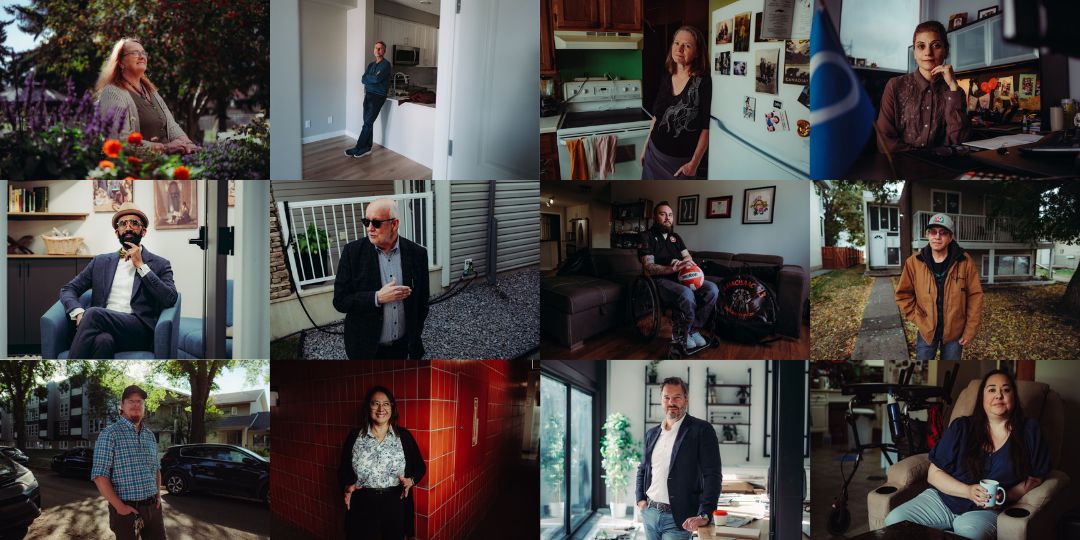
For more on what to expect from the series, managing editor Tim Querengesser sets it up well in his introductory piece. I want to take you behind the curtain to explain how this project came about in the first place and why we approached it the way we did.
Our team has working on this series for months, but the seed that grew into Housing Complex was planted even further back in May of 2023. A valued member of our community reached out in advance of the annual homeless memorial service that the Edmonton Coalition on Housing and Homelessness hosts every year in June to honour those who have died from not having access to adequate housing. Could Taproot do something, he asked, to better tell the story of those who had passed? Could we find a way to go beyond the typical coverage of the event, which tends to share a number — a sadly growing number in recent years — but not much about the actual people?
I didn’t know. But it felt like an idea worth exploring. An obituary is a way of saying, “This person mattered.” Perhaps that was a service we could provide and a way to raise awareness of the tragedy happening on our streets. But at a meeting to discuss the idea further, Jim Gurnett of ECOHH gently suggested it could be very difficult to tell a full and dignified story about someone whose life had ended on the street. It would perhaps be more meaningful and useful to focus on those who were still alive.
That idea resonated, but it brought with it other challenges. How could we sensitively gather and tell those stories without engaging in the kind of extractive journalism that exploits people without making their lives better and sometimes makes things worse? I thought of someone who might be able to help: Eric Rice, a writer whose project This is Where We Live was the subject of a Taproot story in November 2022.
Eric interviewed eight people who were homeless or had experienced homelessness. He turned those interviews into monologues that were then performed by professional actors whose age, gender, and ethnicity matched that of the interviewees. He took pains to get his interviewees’ approval of the way their stories would be told. “Each interview transcript was reviewed and highlighted by third parties, their input was used to create scripts, and the scripts were read back to the interviewees before taping,” he wrote of the project, which was originally intended to be a piece of theatre but became a film due to the COVID-19 pandemic.
I sat down with Eric to see if he had any advice on how we might be able to approach a similar project as respectfully as he did. But as we talked, we realized that focusing on the individual stories of people who had fallen on hard times ignored or even erased that the homelessness crisis is the result of a system we are all involved in. I might even have used the word “complicit,” as I was about to put my house up for sale and hoped to get significantly more than what we paid for it when we bought it in 1999. The market helps some and hurts others. To truly tell the story, we needed to widen the scope.
While all of this was happening, Taproot co-founder Mack Male and I were heads-down in the build-the-airplane-while-you-fly-it mode of a media startup. Even if it was a good idea to try to apply Eric’s approach to a broader cross-section of Edmontonians involved in the housing system, Taproot didn’t have the resources to pull it off alone, and it was vital to us that the people engaging in acts of journalism get paid. The good news was that Eric wanted to not only offer advice but get involved, and he was willing to look for the money to help make it possible.
Working with Jim at ECOHH, Eric put together a proposal for funding from the Alberta Real Estate Foundation, a grant-making organization that supports projects that help people better understand issues related to the real estate industry. With ECOHH as the fiscal agent, Taproot as the publisher, and Eric as the project lead, we made a successful case for a $10,000 grant. Then the real work began.
Guided in part by a survey sent to the partners’ communities, Eric came up with a list of the kinds of people he would seek to interview. As was the case with This is Where We Live, he sought his subjects’ approval of the edited interview before publication. This departs from standard journalistic practice and is not something we typically do at Taproot. But we decided it was justifiable, with the disclosure you are reading now, in order to set vulnerable subjects’ minds at ease. We offered the same to interview subjects who we would not describe as vulnerable, as the ethos of the project has been to put everyone on the same level.
The grant also allowed Eric to pay a small honorarium to some of his interview subjects to recognize the value of their time. This was at his discretion. Those whose participation could be seen as part of their job were not compensated; those whose connection to the system was mostly through lived experience typically were. Again, this is not standard practice in journalism, and Taproot does not pay sources. But we were willing in this case to let Eric put part of the grant towards this in a way that mirrored his practice with the previous project.
Eric conducted his first interview on Feb. 28 and his last one on Sept. 25. While that was happening, Taproot’s team grew, and we saw an opportunity to zoom out a bit on the larger issues connected to the experiences of our 12 interviewees. In May of 2024, our civic affairs podcast Speaking Municipally recorded a live show in conjunction with the summer institute of the Canadian Housing Evidence Collaborative. That acted as a bit of a preview for Housing Complex and gave our audience a chance to hear more from both Eric and Josh Evans, associate professor of human geography at the University of Alberta and director of the Affordable Housing Solutions Lab. Some of the questions posed by attendees inspired the explanatory pieces that our editorial team will share with you in the coming weeks — watch for a new story every Wednesday through October and November.
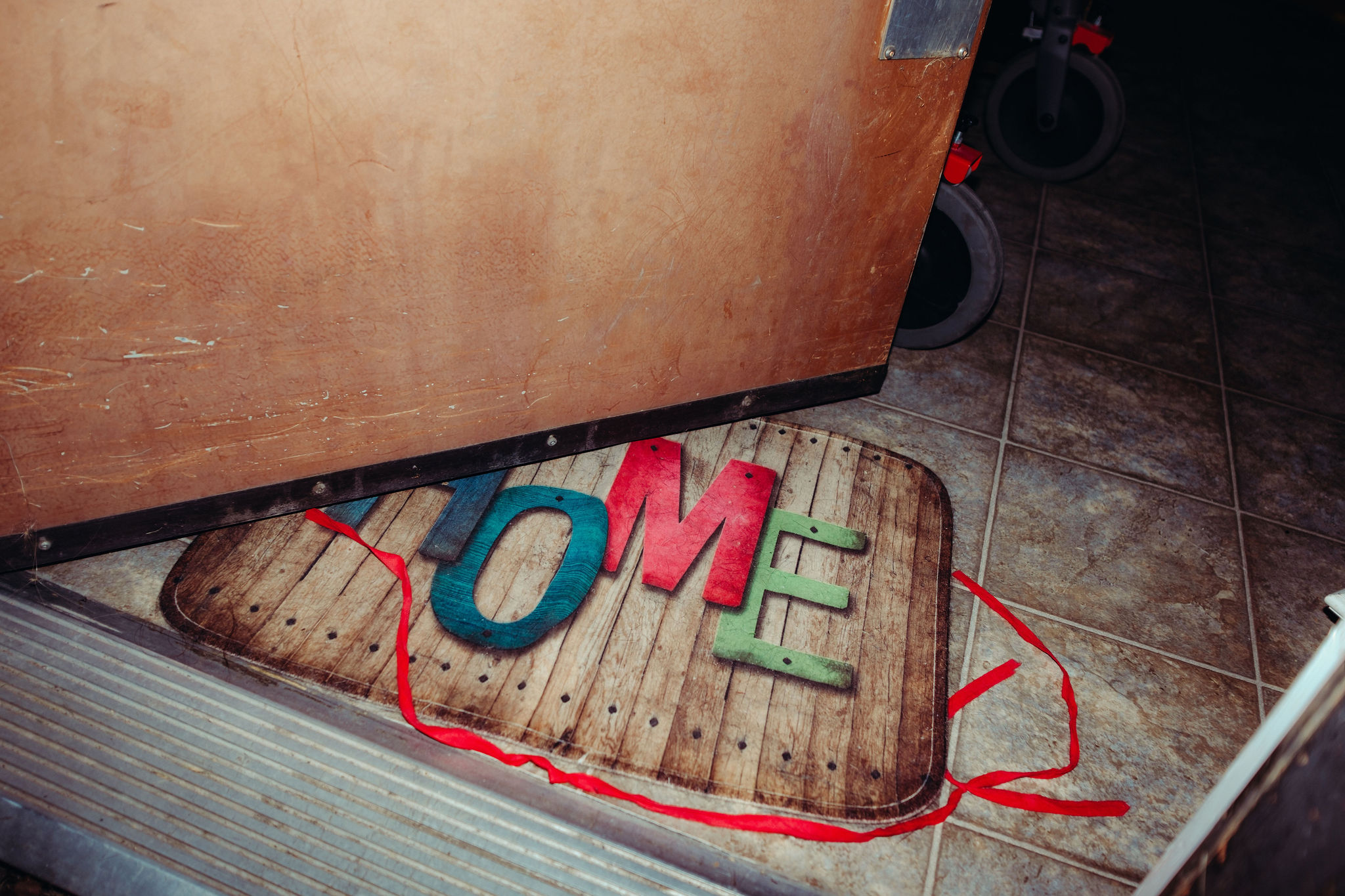
The final piece of the puzzle was how to present all of these words in an attractive and respectful way. Once again, someone Taproot has written about before was able to help: photographer Jordon Hon, whose docuseries about Chinatown was the subject of a December 2022 story. Jordon accompanied Eric to capture portraits of his interview subjects and the ways they live, adding another layer to the storytelling. We’re grateful that the grant allowed us to pair Eric’s careful and perceptive work with Jordon’s beautiful and telling images.
Based on what Tim heard at his listening session earlier this year, Taproot members want us to deliver more original journalism that goes deep, and they want to engage with each other in real life. We hope you’ll consider Housing Complex an example of the former. As for the latter, we’re planning to convene our collaborators, our participants, and the wider Taproot community at an event in November; that will also be an opportunity to learn more about the Affordable Housing Maintenance Fund, an endowment fund that Eric created through the Edmonton Community Foundation to create a stable, ongoing source of funding for the maintenance and repair of low-income housing in Edmonton. Stay tuned for your invitation to join us!
We’re grateful for the Alberta Real Estate Foundation’s support, which allowed us to pay for Eric’s time, Jordon’s photos, and some ancillary expenses. The grant did not cover the explanatory work, the development of the microsite displaying the project, or the coordination of many moving parts — Taproot relies on members, sponsors, and other paying customers to fund all of that.
You can help us continue to do the kind of work that informs and connects our community by becoming a Taproot member. If you’re already a member, please invite a friend to join you. We make all of our work free to read, but it is by no means free to make, and your support makes a big difference.

 Taproot Publishing
This is confirming realities of this complex issue and thank you Karen, Eric and the team at Taproot for highlighting this issue. I was hoping that at one of the Litfest’s events with the author of Our Crumbling Foundations, Gregor Cragie, and one of the interviewees of the Housing Complex project and another interviewee from the author who was from Victoria, BC that there is a lack of accessible, safe and affordable housing. The Rights to Roofs short film and premiere and panel discussion about accessible housing is on YouTube hosted by The Self Advocacy Federation, based in Edmonton, Alberta, Canada and moderated by John Humphrey Centre for Peace and Human Rights partnered with Creative Director, Chris McBain of Sissy Entertainment who has written, in partnership with the SAF, a series of short films that bring awareness to the issues that affect people who have disabilities. https://youtu.be/clElZYNAk3U?si=mSmtNAlKgxuGKvNr
LikeLike